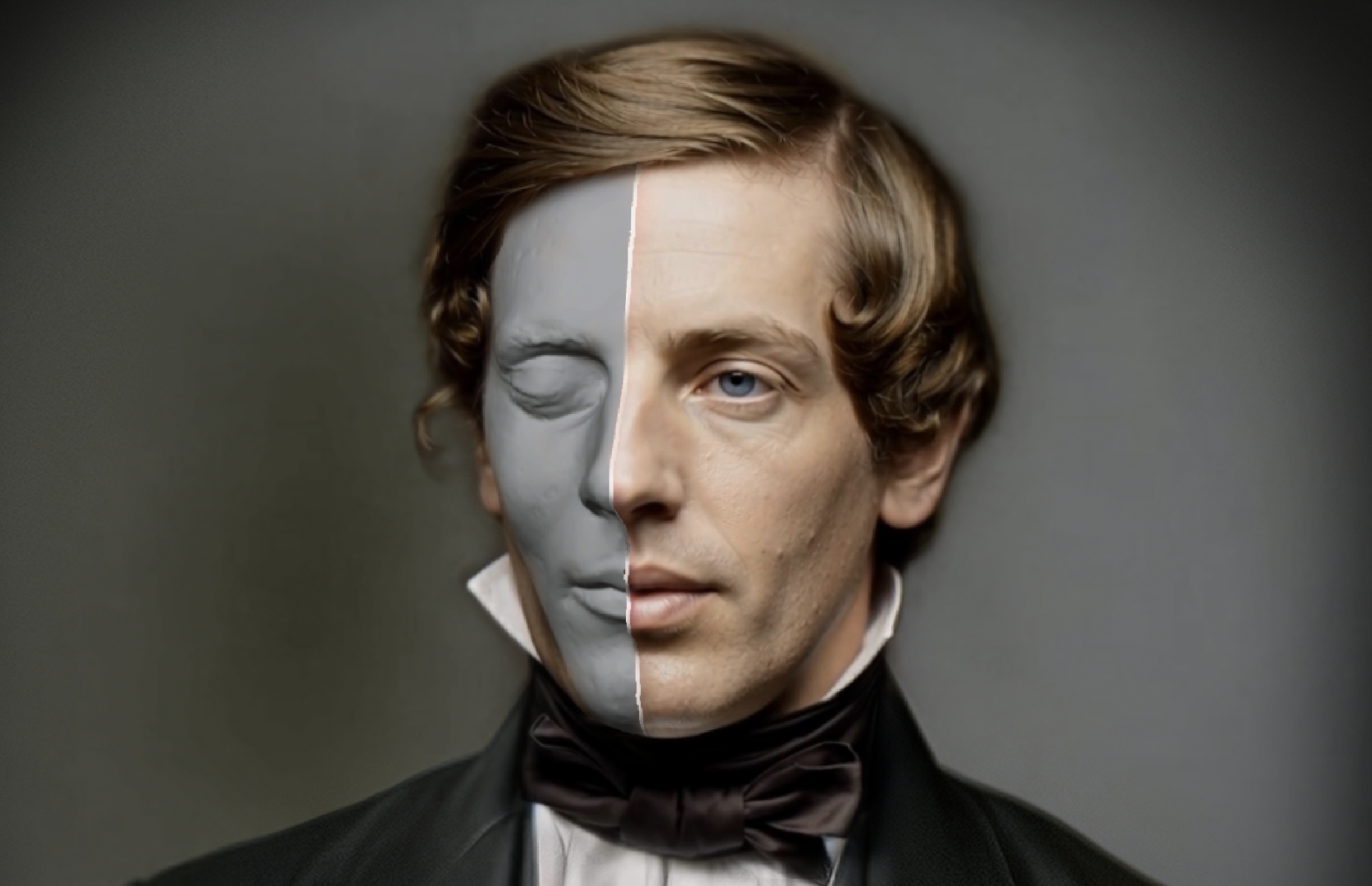
Note: updated with enhanced final renderings November, 2025.
Introduction
The obsession with the physical likeness of the prophet Joseph Smith is a Mormon cultural phenomenon fueled by many weighty factors: he was the man chosen by God to restore the Gospel of Jesus Christ, he had seen and spoken with gods and angels, and his contemporaries all agreed that there was something supernatural about his person. These elements all combine to make the quest for his image one of desiring to reach out and touch the divine—to get as close to deity as physically possible from the perspective of believers. Added to this is the tragic historical fact that the technology behind photography was born nearly at the same time that Joseph Smith died, giving any possible image a sort of mystical quality, like a sighting of a fairy or the Loch Ness monster—the sheer existence of a photo seems itself a miracle, if indeed one exists.
It is in this storied pursuit (read: obsession) that this blog post comes to you once again. In the time intervening between my last attempt at identifying a possible photo of Joseph Smith and the present, at least one other contender has entered the fray as a possible image of the prophet, and that in a big way. For those who do not know, a descendant of Joseph Smith by the name of Dan Larsen produced a daguerreotype that I will refer to as the “locket daguerrotype” inasmuch as it is a photo in a locket. I have actually participated in some meticulous restoration work of that photo and have been privy to detailed discussions about its strengths and weaknesses. But the purpose of this post is not to dwell on the locket daguerreotype at length, but simply refer to it in contrasting the strengths and weaknesses of yet another candidate that this blog post will formally introduce. Many scholars have jumped on the bandwagon of exclaiming with great enthusiasm that in the locket daguerreotype the true likeness of the prophet has finally been found. But is their exuberance premature?
Before delving into the details of this new proposed photo, let’s first take a refreshed deep dive into what we think we know about what the prophet should look like based on (1) eyewitness descriptions, (2) eyewitness drawings and paintings, (3) the death mask, and (4) expected familial traits. It is important to note that these four sources provide us detail in a descending order of idealism and an ascending order of reality, meaning the first sources will be most ideal—presenting an exaggerated description of perfection—while the last sources will be the most realistic (reality often falling short of ideals). Also, with added insights gathered in the interim since my last post on the likeness of the prophet, this analysis will prove helpful in not only establishing the superiority of the new proposed image below but also in providing some solid criteria with which to judge other candidate images that have been proposed.
1. Physical descriptions: nearing idealism, distant from reality
Since we are concerned with the image of the prophet relative to his face, the following descriptions of the prophet will be edited down to focus, where possible, only on those attributes that would pertain to recognizing his visage. Beneath each description will be a summary of key observations for reference. Again, with the exception of descriptions from people who were indifferent about Joseph Smith, the descriptions provided in this first section will be most idealized compared to real life:
Peter H. Burnett (indifferent)
“Joseph Smith, Jr., was at least six feet high, well-formed, and weighed about one hundred and eighty pounds. His appearance was not prepossessing…. You could see at a glance that his education was very limited…. There was a kind, familiar look about him, that pleased you…. Sidney Rigdon…was a man of…fine appearance and dignified manners; but he did not possess the native intellect of Smith, and lacked his determined will.”
Key Observations:
- Not attractive
- Kind look
- Unrefined appearance
George Q. Cannon
“His head, crowned with a mass of soft, wavy hair was grandly poised. His face possessed a complexion and of such clearness and transparency that the soul appeared to shine through. He wore no beard, and the full strength and beauty of his countenance impressed all beholders at a glance. He had eyes which seemed to read the hearts of men.”
Key Observations:
- Soft, wavy hair
- Grandly poised hairdo
- Extremely fair complexion
- Penetrating gaze
Elam Cheney
“Brother Joseph was a man weighing about two hundred pounds, fair complexion, light brown hair. He was about six feet tall, sound bodied, very strong and quick—no breakage about his body. He most always wore a silk stock, and was smooth faced [clean shaven]. He was very sympathetic and would talk to children and they liked him. He was honest, and was liked by everybody who knew him.”
Key Observations:
- Fair complexion
- Light brown hair
- Clean shaven
Rachel R. Grant
“He was a fine, noble-looking man, always so neat. There are some of the pictures that do not look a particle like him. When he was preaching you could feel the power and influence.”
Key Observations:
- Fine & noble
- Unlike most attempts to paint him (up to 1905)
Charlotte Haven
“[He] is a large, stout man, youthful in appearance, with light complexion and hair, and blue eyes set far back in the head, and expressing great shrewdness, or should I say cunning. He has a large head…. He is also very round shouldered.”
Key Observations:
- Youthful appearance
- Light complexion
- Set-back, shrewd, cunning eyes
- Large head
Jane James
“I could not begin to tell you what he was, only this way: he was tall, over six feet; he was a fine, big, noble, beautiful man! He had blue eyes and light hair, and very fine white skin.”
Key Observations:
- Blue eyes
- Light hair
- Fine white skin
Lydia B. Knight
“Many were the curious glances that I cast at this strange man who dared to call himself a prophet. I saw…brown hair, handsome blue eyes, which seemed to dive down to the innermost thoughts with their sharp, penetrating gaze; a striking countenance, and with manners at once majestic yet gentle, dignified yet exceedingly pleasant.”
Key Observations:
- Brown hair
- Blue eyes
- Penetrating gaze
- Striking countenance
John D. Lee
“Joseph Smith was a most extraordinary man; he was rather large in stature, some six feet two inches in height, well built though a little stoop shouldered, prominent and well-developed features, a Roman nose, light chestnut hair, upper lip full and rather protruding, chin broad and square, and eagle eyed, and on the whole there was something in his manner and appearance that was bewitching and winning; his countenance was that of a plain, honest man, full of benevolence and philanthropy and void of deceit or hypocrisy. He was resolute and firm of purpose, strong as most men in physical power, and all who saw were forced to admire him, as he then looked and existed.”
Key Observations:
- Prominent features
- Roman nose
- Full, protruding upper lip
- Broad, square chin
- Eagle eyed (perhaps referring to a shaded eyes or a prominent brow ridge)
*Being eagle eyed can mean two things in the English language: (1) to be quick to observe details, and (2) to have an eye shadowed by a strong brow or a brow marked by consternation. In the context of a physical description of the prophet, it is the second definition that makes sense as the commentator’s intent.
Lyman O. Littlefield
“The opportunity [to meet the Prophet] came, and I first beheld him a tall, well-proportioned man, busily mingling with the members of Zion’s Camp, shaking hands with them, meeting them with friendly greetings and carefully seeing to their comforts. His familiar, yet courteous and dignified manner, his pleasant and intelligent countenance, his intellectual and well-formed forehead, the expressive and philanthropic facial lineaments, the pleasant smile and the happy light that beamed from his mild blue eyes; all these were among the attractive attributes that at once awakened a responsive interest in the mind of every kindly beholder, which increased in intensity as the acquaintance continued.”
Key Observations:
- Intellectual and well-formed forehead
- Philanthropic facial lineaments (kind features)
- Pleasant smile
- Happy eyes
James Palmer
“[Joseph Smith] was of a light complexion, his hair was of a flaxen color, with little or no he wore no whiskers , his chin was a little tipped with light brown hare, his nose was rather long and straight, his mouth was rather massive and his upper lip rather long and a little inclined to be thick. He had a large full chest and intelligent eyes and fine limbs; altogether he presented a very formidable appearance, being a man of Gentlemanly bearing.”
Key Observations:
- Clean shaven (or usually so)
- Recessed chin (‘tipped’ backward, not forward as I had previously conjectured; more on that below)
- Long, straight nose
- ‘Massive’ (fleshy) mouth
- Long, thick upper lip
- Intelligent eyes
Parley P. Pratt
“President Joseph Smith was in person tall and well built, strong and active, of a light complexion, light hair, blue eyes, very little beard, and of an expression peculiar to himself, on which the eye naturally rested with interest, and was never weary of beholding. His countenance was ever mild, affable, beaming with intelligence and benevolence; mingled with a look of interest and an unconscious smile, or cheerfulness, and entirely free from all restraint or affectation of gravity; and there was something connected with the serene and steady penetrating glance of his eye, as if he would penetrate the deepest abyss of the human heart, gaze into eternity, penetrate the heavens, and comprehend all worlds.”
Key Observations:
- Very little beard
- Peculiar, interesting natural expression
- Mild countenance
- Smart and kind looking
- Penetrating eyes
Josiah Quincy (indifferent)
“He was a hearty, athletic fellow, with blue eyes standing prominently out upon his light complexion, a long nose, and a retreating forehead. He wore striped pantaloons, a linen jacket, which had not lately seen the washtub, and a beard of some three days’ growth. This was the founder of the religion which had been preached in every quarter of the earth. A fine-looking man is what the passer-by would instinctively have murmured upon meeting the remarkable individual….”
Key Observations:
- Eyes that stood out prominently
- Long nose
- Retreating or sloped forehead*
- Some stubble
- ‘A fine-looking man’
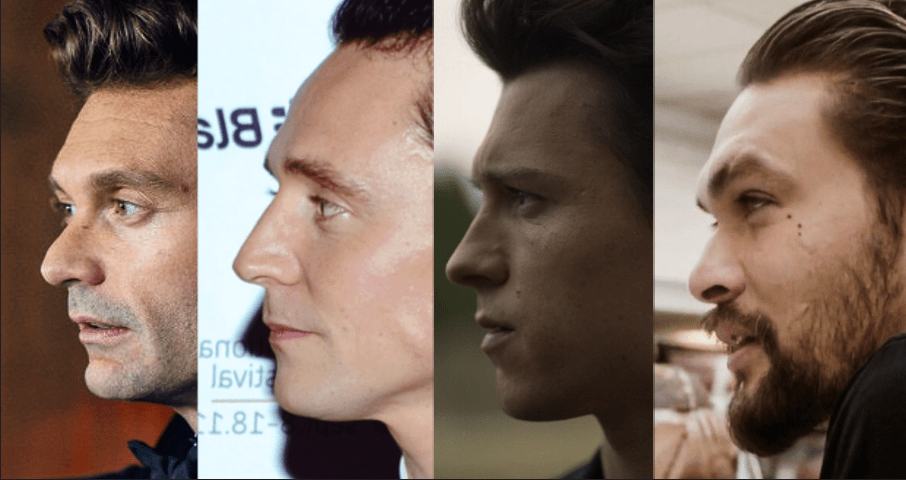
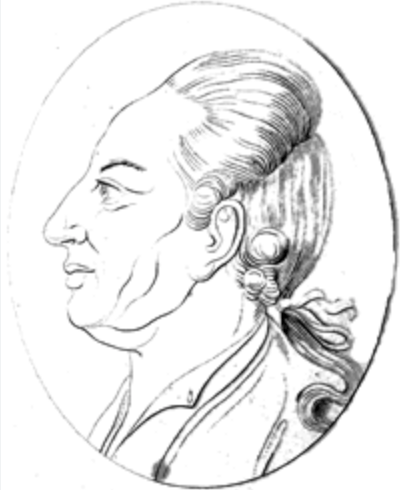
*A sloped or ‘retreating forehead’ may sound unappealing at first, and, as the next description will show, in the early 19th century it may well have been considered an unattractive trait; however, this is not an unsightly deviation in regards to beauty standards in the 21st century. First off, a typical sloped forehead is not really noticeable from the front or even a three-quarter angle view of a person; and secondly, many leading men in Hollywood, renown for their good looks, have precisely the same retreating forehead as Joseph Smith had (compare the images here to his profile depictions later in this blog post):
St. Louis Weekly Gazette Reporter (indifferent)
“General Smith is in stature and proportion a very large man; and his figure would probably be called a fine one, although by no means distinguished for symmetry or grace….
“His forehead is white, without furrow, and notwithstanding the small facial angle, somewhat symmetrical. His hair is quite light and fine, complexion pale, cheeks full, temperament evidently sanguine [youthful and optimistic], lips thin rather than thick, and by no means indicative of boldness or decision of character.
“But the Prophet’s most remarkable feature is his eye; not that it is very large, or very bright—very thoughtful or very restless—even very deep in its expression or location; for it is usually neither of these. The hue is light hazel, and is shaded, and at times, almost veiled, by the longest, thickest light lashes you ever saw belonging to a man whatever the facts respecting the ‘dear ladies.’
“The brows are, also, light and thick—indeed, precisely of that description called beetle-brow. The expression of the Prophet’s eyes when half closed and shaded by their long lashes was quite as crafty as I ever beheld.
“His voice is low and soft, and his smile, which is frequent, is agreeable.”
Key Observations:
- Smooth forehead
- Small facial angle (retreating/sloped forehead)*
- Light, fine hair
- Eyes not deeply located
- Sanguine head**
- Thin lips
- Shaded, crafty-looking hazel eyes
- Protruding brow
*The “facial angle” was a fad scientific term of the day, introduced by the then-popular study of phrenology (skull shape and its influence on personality traits). Essentially, the flatter ones face, or the more forward one’s forehead appeared in comparison to the face, the more intelligent one was considered to be. The reporter from the St. Louis Gazette is here simultaneously making an observation about the shape of Joseph Smith’s head (a protruding face and with a sloping forehead) and disparaging his character from a “scientific” standpoint. It’s perhaps no coincidence then that the prophet once obtained a revelation about phrenology (5 Jan 1841) wherein he was told that “there was no reality in such a science but [it] was the works of the Devil.”
**The sanguine temperament was one of the four humors, elementally derived personality explanations, of an antiquated system of philosophy, ostensibly connected to Ayurvedic medicinal traditions. Certain head shapes were thought to indicate the associated humor, and the sloping forehead connected to the air or the sanguine temperament. The author, in using the word to describe the prophet’s ‘temperament,’ likely intended to comment on the character traits associated with sanguinity: optimism, hope, cheerfulness, and youthfulness.
George W. Taggart
“Now something concerning Old Jo, so called. He is a young looking man of his age, which is near thirty-eight years and one of the finest looking men there is in the country and he does not pretend to be a man without failings and follies.”
Key Observations:
- Youthful appearance
- Fine looking man
Wandle Mace
“He was a fine looking man, tall and well proportioned, strong and active, with a light complexion, blue eyes, and light hair, and very little beard. He had a free and easy manner, not the least affectation, yet he was bold and independent, and very interesting and eloquent in speech.”
Key Observations:
- Fine looking
- Light complexion
- Blue eyes
- Light hair
- Very little beard
Benjamin Winchester (indifferent)
“[Joseph’s] pictures, which I see in windows and cabinets here [in Salt Lake City], flatter him very much. The photographs do not show the peculiar shape of his head, especially the retreating forehead which any observer of the man in life could not fail to notice. He was possessed with an inordinate degree of vanity and was quite susceptible to flattery.”
Key Observations:
- Not as flattering looking as his pictures appear (in 1889)
- Peculiar shaped head
- Retreating/sloped forehead
Conclusions
Though a fairly consistent portrait can be imagined using the above descriptions, it should be apparent that some observations appear contradictory at first. For example:
| described attribute | opposite described attribute |
|---|---|
| Not attractive, unrefined | Fine looking man |
| Set-back, beetle-browed, eagle eyes | Eyes not deeply located, prominent |
| Full, protruding upper lip & fleshy mouth | Thin lips |
| Recessed chin; narrow facial angle | Broad, square chin |
This is due, of course, to the fact that: (a) beauty is in the eye of the beholder, and thus descriptions of a person from memory can be quite subjective; and (b) people were not describing a motionless corpse but a living, animated person whose aspect and appearance could vary during normal observation (imagine a painter trying to paint someone who is constantly moving or engaged in conversation—it would be difficult to reproduce an objective likeness!). The challenge and opportunity this presents for the hunt of the photographic likeness of the prophet is to find a face that can be described in all apparently contradictory ways at once!
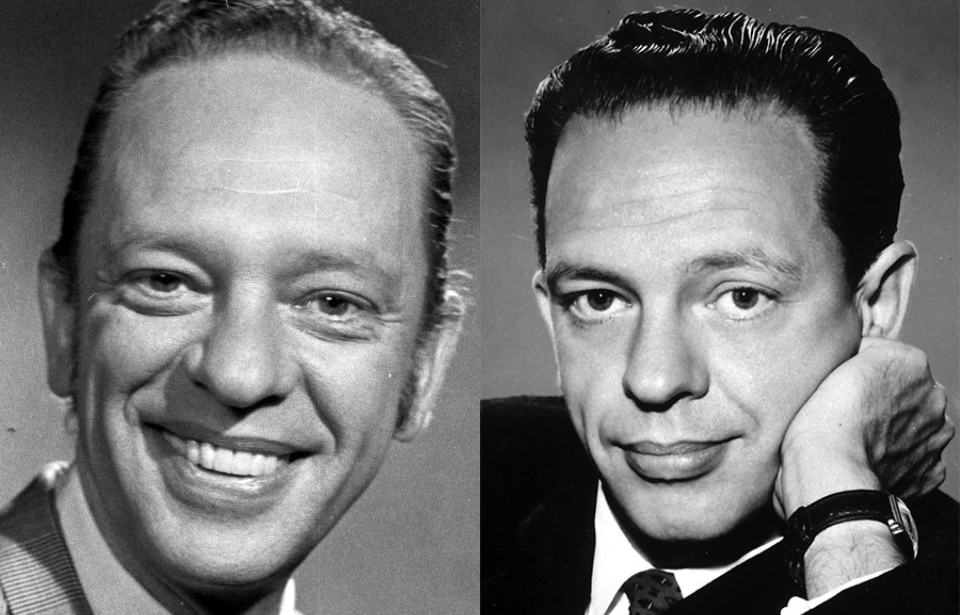
You have probably known a person or two in life that you would struggle to describe as having either a quality of one type or another because, depending on the situation, both features may be accurate. Such a person becomes difficult to describe but easy to recognize (due in part to the need for more accurate descriptors than the lay person typically possesses).
Consider for example the actor Don Knotts. Would his lips be described as thin or thick? His mouth narrow or fleshy? The answer might depend on the photo, or in other words, the moment one is attempting to capture and describe:
Other features described are echoed without contradiction, such as the following:
| Described attribute |
|---|
| Youthful looking |
| Kind appearance |
| Penetrating gaze |
| Long nose |
The next stop in solidifying some of these features is to compare them to drawings done during the prophet’s lifetime.
2. Physical Depictions: between idealism & reality
There are very few drawings of Joseph Smith that have survived that were done while he was living. The few that do exist are crucial in attempting to build a full image of what Joseph would have looked like, but they are all limited for one primary reason: lack of artistic skill. The one painting that was done at a face-on angle that claims to be from life suffers from not being humanly proportional, and all other attempts (that have survived) are profile drawings or shadow tracings because the artists involved had to rely on limited viewpoints to achieve a successful output. Again resuming our descending order of idealism, this second section gives us more accurate depictions of Joseph, being slightly less idealized than the reminiscences above:
Sketch, unknown artist, Nauvoo, 1842
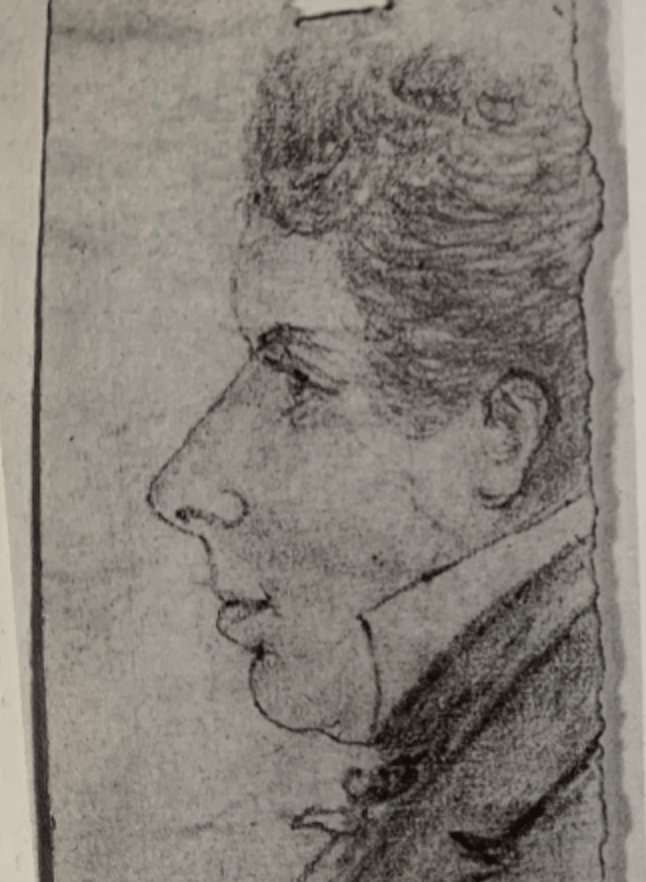
Key Observations:
- Hair brushed from right to left on top; forward on side
- Perhaps the only drawing of the prophet showing that though he parted his hair on one side, on the other side it combined more or less chaotically instead of going backward again
- It’s possible that his sloped forehead was not visible when viewed against the direction of his brushed hair
- Long, straight nose
- A full and protruding bottom lip
- Round almost double chin
- Vertical or popped shirt collars
Sketch, Bathsheba Smith, Navuoo, 1843
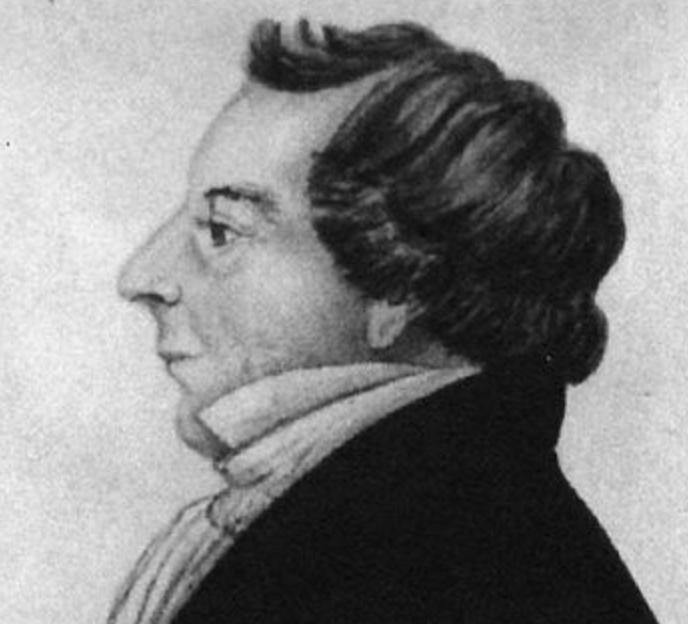
Key Observations:
- Hair brushed from left to right on top (inverse of the above example); forward on side, cut to a sharp edge
- Receded hairline visible only at the deepest point of the parting of the hair
- Sloping forehead
- Hooded eyelid, or the combination of a large superior orbital rim and a low palpebral sulcus (upper eyelid crease)*
- Dark circles beneath and in front of the eye indicating tear troughs or nasojugal grooves**
- Well-lit cheekbones, indicating lateral prominence
- Partially concealed ear with a large, possibly detached lobule
- Thin lips but positioned prominently due to a significant mentolabial sulcus
- Slight upturned corner of the mouth
- Round chin
- Vertical or popped shirt collar
*An example of this is the eye on the left as opposed to the eye on the right (there are differing degrees between the two examples; the prophet’s eyes appear somewhere between these two):
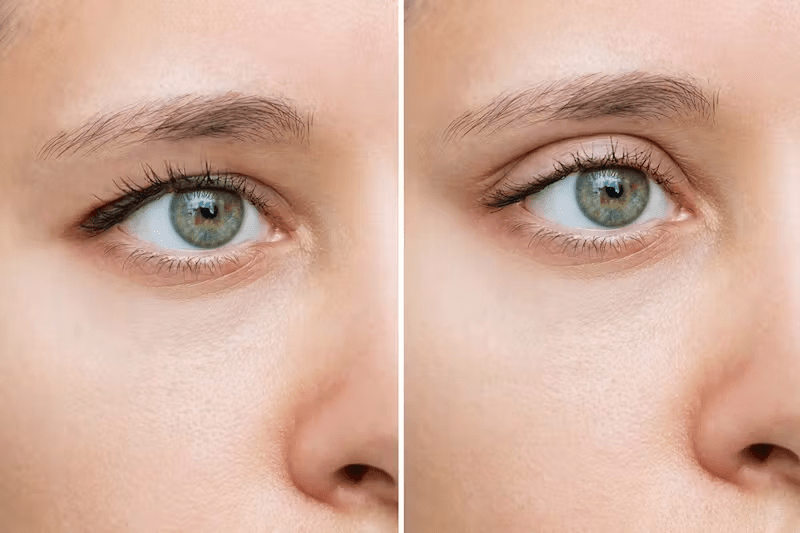
**An example of this:

Painting, Sutcliffe Maudsley, Nauvoo, 1842
Sutcliffe Maudsley’s depictions are notable for one particular reason, which is that he purportedly employed a shadow tracing method to execute his profile portraits. This meant that the outline of the face was a perfect facsimile of the individual’s silhouette, into which Maudsley could then fill in details to the best of his ability.
(The second image is from a book published by John C. Bennett in 1842 that utilized the same apparent source image by Maudsley, though the engraver was Oliver Pelton. Note in the Pelton engraving that the full bottom lip is preserved. There are a few other images of Joseph attributed to Maudsley, but they appear to all be variations of the 1842 original except in one case [see below].)
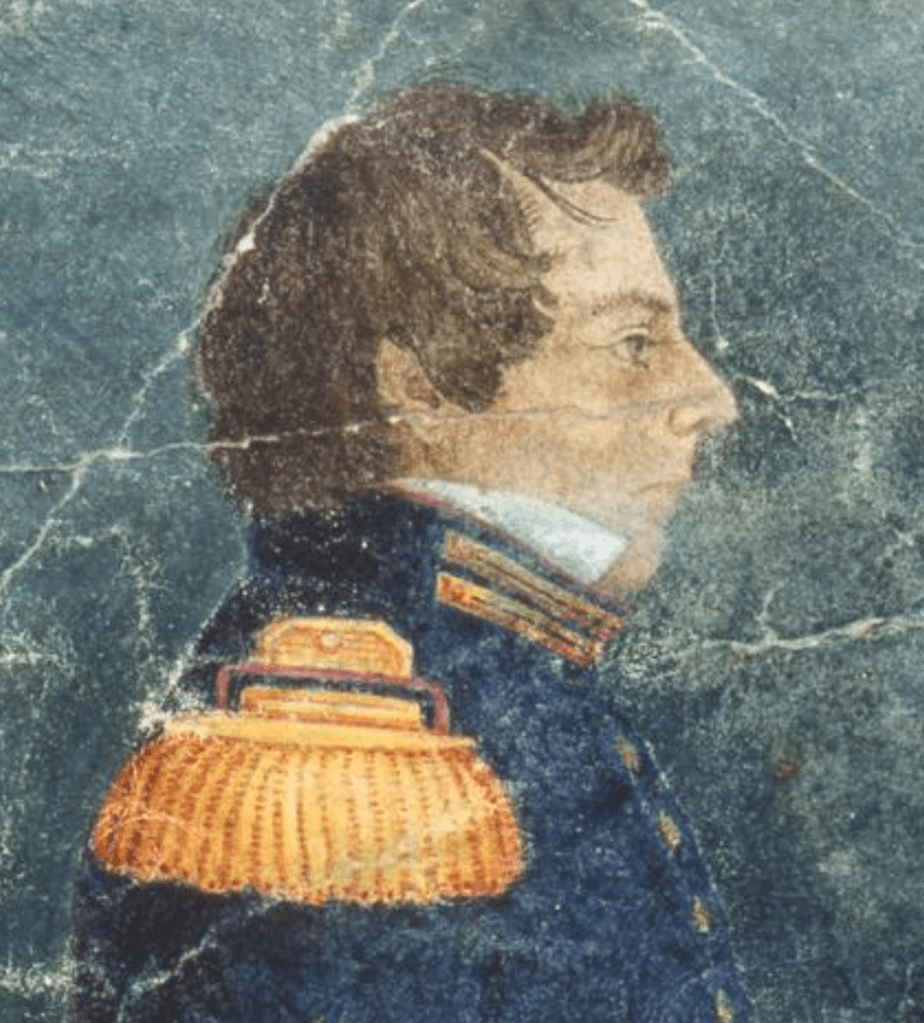
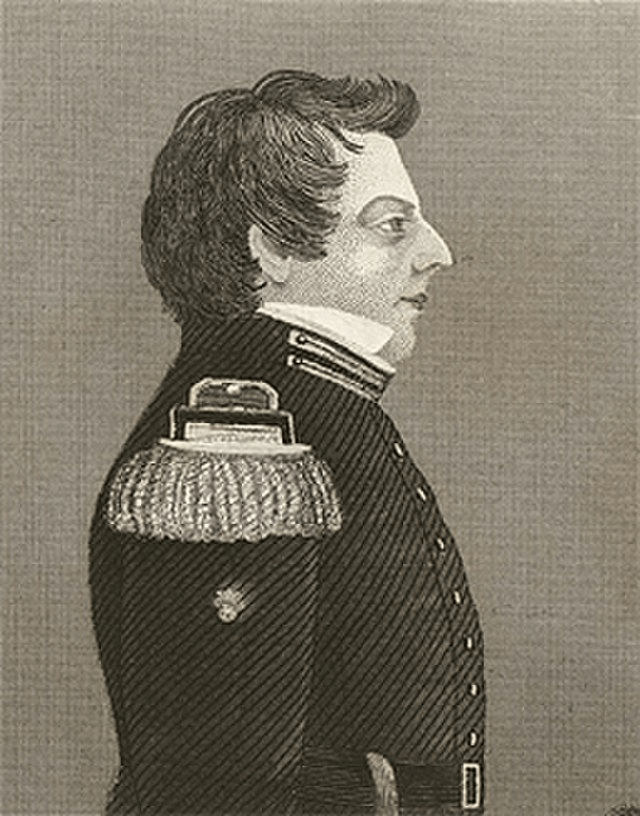
Key Observations:
- Hair brushed from right to left on top (again inverse to the previous image); forward on side, again cut with relatively sharp edges
- Small glimpse of a receding hairline (top image)
- Sloping forehead
- Arched eyebrow that drops precipitously at the lateral (outside) extreme
- Hooded eyelid, or the combination of a large superior orbital rim and a low palpebral sulcus (upper eyelid crease)
- Significant bottom eyelid presence
- Some indication of nasojugal grooves
- Prominent cheek bones
- Half-concealed ear, with a well-defined scapha; possibly detached lobule
- Long, straight nose
- A full and protruding bottom lip combined with a relatively narrow wet/dry line
- Downward turned corners of the mouth
- Vertical or popped shirt collar
Painting (Profile), attr. David Rogers, Nauvoo, 1842

Key Observations:
- Hair brushed from right to left on top; forward on side, cut to a sharp edge
- Receded hairline visible only at the deepest point of the parting of the hair
- Parted hair shows a dramatically flattened aspect leading down from the part as if greased or brushed with some type of stiff pomade
- Sloping forehead
- Hooded eyelid, or the combination of a large superior orbital rim and a low palpebral sulcus (upper eyelid crease); the area below the eyebrows is darker, perhaps shaded, than around it
- Significant bottom eyelid presence
- Long, straight nose
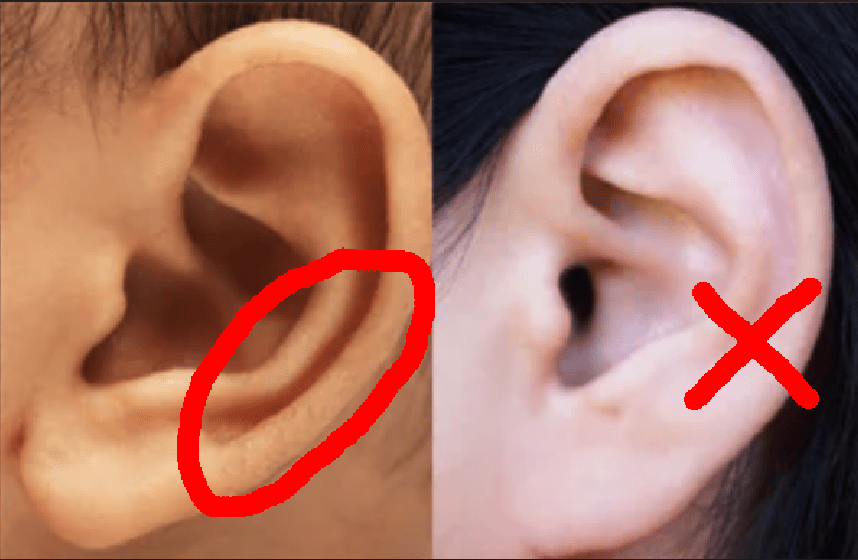
- Almost fully exposed ear, with a large lobule that appears positively detached, showing also: a well-defined scapha and a narrow antihelix*
- Full lips
- Round chin
- Vertical or popped shirt collars
*An example of this:
(Also note the detached lobule in the left image as opposed to the attached lobule on the right.)
Painting (Face-on), attr. David Rogers, Nauvoo, 1842
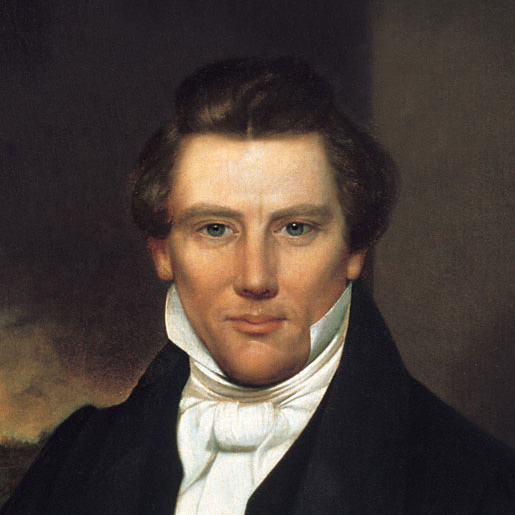
Key Observations:
- Hair apparently combed forward on the sides, marked by some curled, sharp edges though unrealistically executed; hair on top appears to be combed backward.
- Smooth forehead
- An emphasized left glabellar line
- Straight, slightly arched eyebrows
- Hooded eyelid, or the combination of a large superior orbital rim and a low palpebral sulcus (upper eyelid crease)
- Accentuated almond shaped eyes
- Indication of significant bottom eyelids
- Slight indication of nasojugal grooves
- Partially visible ears showing wide lateral extension, at least of the lobules, which appear to be large
- Prominent cheek bones narrowing toward the mouth
- Long, straight nose with little-to-no alar creasing
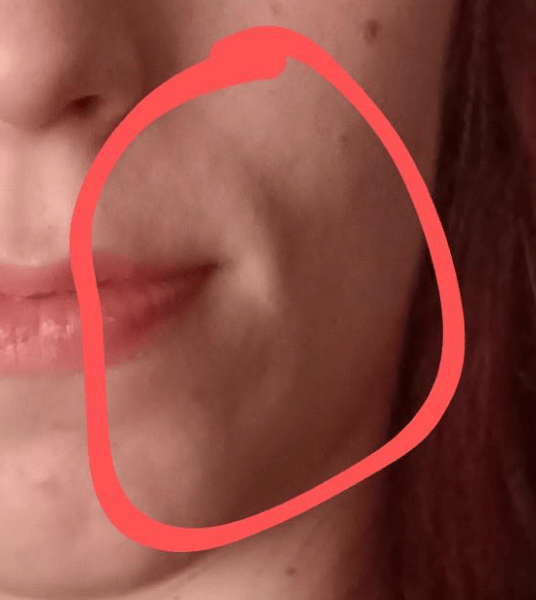
- Apparent hypertrophy of the left orbicularis oris muscle, due possibly to forceful speaking (the outdoor preaching venues in Nauvoo were notorious for requiring loud speaking)*
- A full and protruding bottom lip, marked by an excessively sharpened mentolabial sulcus (likely artistic overemphasis)
- Round chin
- Vertical or popped shirt collars
*An example of this:
Drawing, Sutcliffe Maudsley, Nauvoo, 1844
It is speculated that this drawing was done as a memorial to the slain prophet by Maudsley as it was found with a companion drawing of Hyrum Smith. Whether it was executed just before or just after his martyrdom is uncertain given some of the details that differ from Maudsley’s previous attempt at drawing the prophet, including the change of garb.
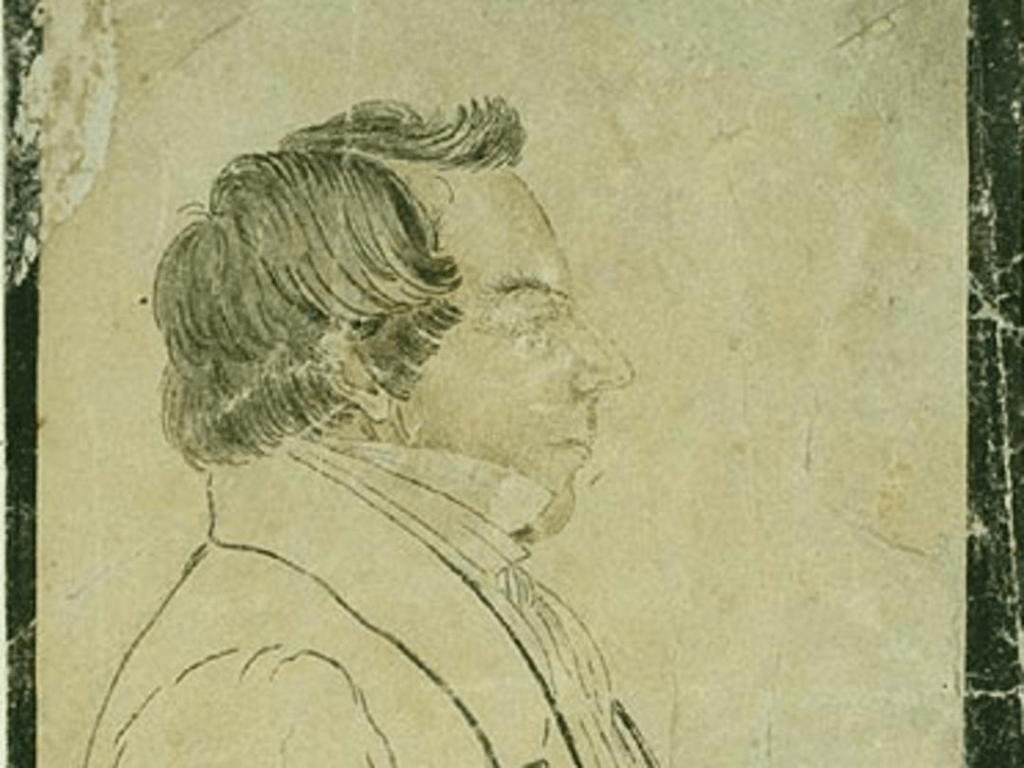
Key Observations:
- Hair brushed from right to left on top ; forward on side, again cut with relatively sharp edges
- Parted hair shows a dramatically flattened aspect leading down from the part as if greased or brushed with some type of stiff pomade (unlike Maudlsey’s 1842 attempt)
- Sloping forehead
- Arched eyebrow rendered in a sort of diffuse or frayed way
- Almost fully exposed ear showing indication of a well-defined scapha and a narrow antihelix (unlike rudimentary ears in Maudsley’s 1842 attempt)
- Long, straight nose
- A full and protruding bottom lip (clearer than in Maudlsey’s 1842 attempt)
- Vertical or popped shirt collar
Conclusions
The most noteworthy of these paintings is the face-on portrait painting attributed to David Rogers. Indeed, Joseph Smith’s journal reveals that he did spend some days posing for a painting with Rogers, but whether it is this painting or not is disputed (as is the authorship of the profile painting above it, which Brigham Young brought west with him from Nauvoo in 1847). Nevertheless, regardless of the authorship, the face-on painting has a huge argument in its favor for being a relatively faithful likeness of the prophet, which is that Joseph Smith III, who was twelve years old when his father died, said it looked the most like his father to any other painting. He also stated that it matched a daguerreotype taken of the painting (taken, presumably, to preserve the likeness in case the painting was ever damaged). A copy of that preservationist photo was copyrighted by him in 1879 and submitted to the Library of Congress under the label “Joseph Smith / Photo.”
Yet, the painting is apparently deficient in certain human proportions, showing that the artist, though skilled in many ways, failed to assemble the disparately observed features of the prophet in a natural way. Examples of this include the overly long nose and impossibly small mouth dimensions. That this painting could be a perfect likeness of the prophet can easily be debunked by simply comparing it to the last piece of physical evidence we have of his likeness: the death mask.
3. The Death Mask: Distant from Idealism, Closer to Reality
When Joseph and Hyrum died, there was a fairly short window of time wherein their bodies could be cleaned and presented to mourners before needing to be interred so that their decomposition would be hid from view. That window was made smaller by the hot, humid weather of late June 1844 in Nauvoo. Within this small window, the opportunity was taken to also make plaster casts of their faces. To do this, it is reported that the bodies were sat up in chairs with a wood frame to hold them in place, after which a casting was made of their faces by first oiling or greasing their faces after which thin layers of plaster were applied and built up in layers. When the mold dried, after about an hour, it was carefully removed from the corpse and used to create a replica of the three-dimensional face in plaster.
It has been assumed that this process created a perfect reproduction of the resting face of the deceased, but there are some indications that this was not perfectly the case with the prophet’s mask.
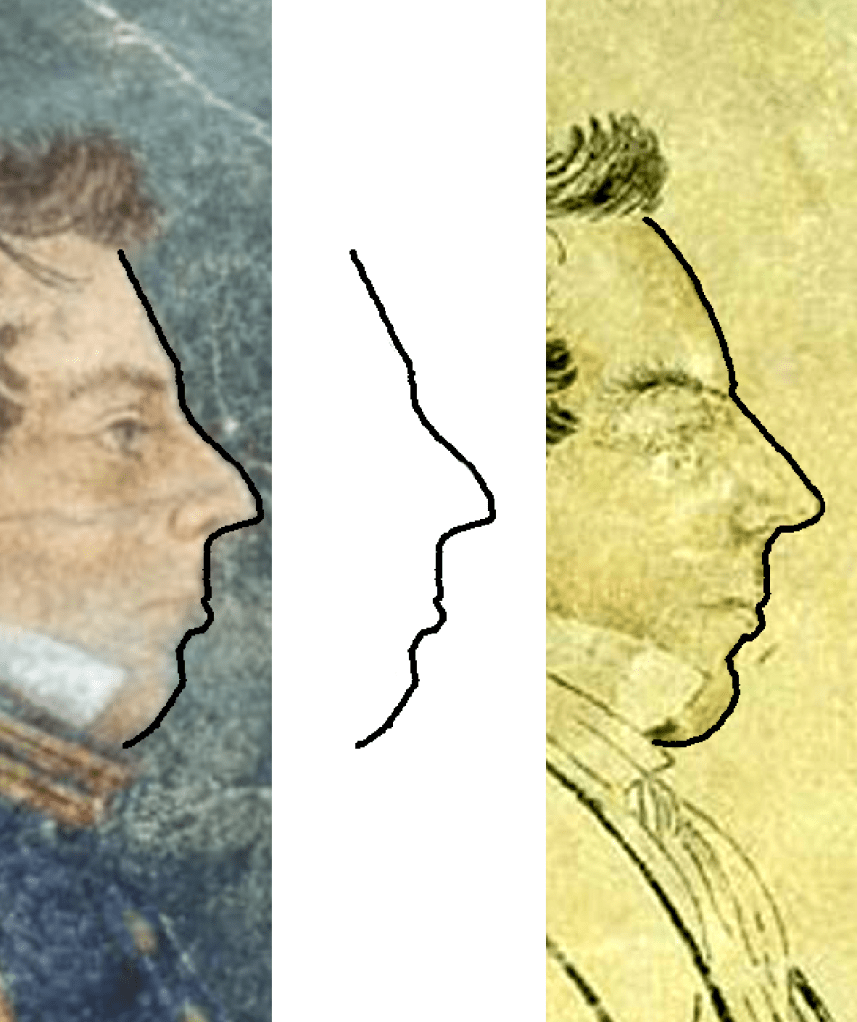

The above illustration (Fig. 1) shows the outline traced from Maudsley’s shadow-traced drawings of the prophet, the 1842 version on the left and the 1844 on the right. Between the two images is a the merged form of both, showing perfect alignment between them both.
On the left (Fig. 2) is an illustration of the shape of the death mask (blue) compared to the shape of the outline derived above (red). When aligned to the forehead and nose (for good reason, as will be discussed below), there is actually a discrepancy between the shapes as shown by the overhanging red area.
This discrepancy shows something very important to know when analyzing the death mask: (1) the death mask is mostly correct in showing the shape of Joseph’s features when he was alive (debunked is the theory previously endorsed by this author that his face was disfigured from his fall in Carthage), and (2) the lower portion of his face in the death mask deviates by at least 3 millimeters from the composition of his face as it was when he was living.
Though this does not sound like a very big difference, the results in reality are significant, especially in the context of attempting to identify a photographic likeness of the living man. (It also has an impact an artistic attempts to portray his likeness using the death mask as a reference, visually assuming his face rested further back than it did.)
In fact, in the The Angle Orthodontist, an international journal of orthodontics and dentofacial orthopedics, a study was published in July of 2006 entitled “Accuracy of Facial Plaster Casts: A Three-dimensional Scanner Study” that sought to answer the question of just how much a face is altered from its resting state when captured in a plaster mask (the context being the practice of facial reconstruction techniques for orthodontic surgeons). By comparing the results of plaster masks to faces at rest using 3D scanning, the study found the following:
“[Plaster casts] can cause between 1 to 3 mm of soft tissue deformation. The resulting impression errors are especially evident in areas that are important for the assessment of facial esthetics (lower facial third, nasal tip, subnasal region, and cheeks). The impression errors at the forehead, glabella, and nasal base, on the other hand, were moderate (an average of 1 mm).” link
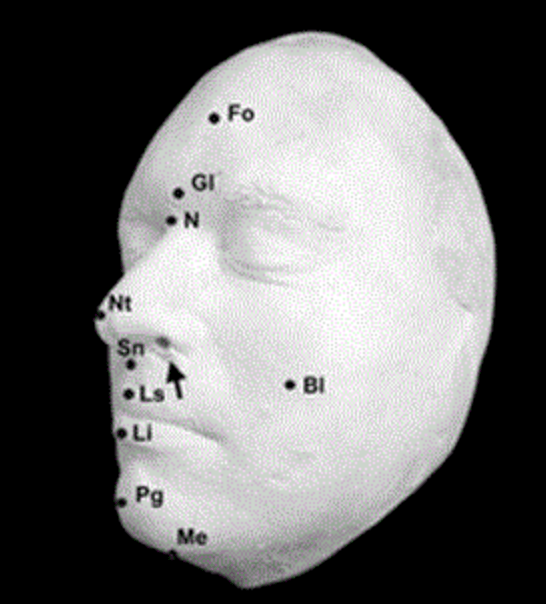
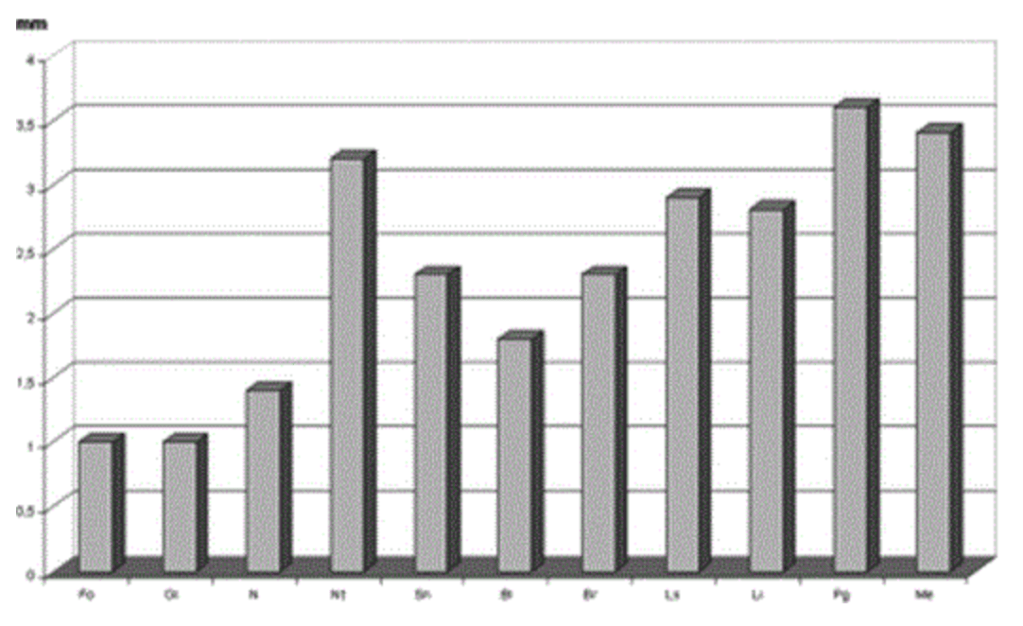
This shows that the discrepancy noted in the above comparison between Joseph Smith’s death mask and the Maudsley portrait outlines (see Fig. 2) is in perfect accordance with expected deviations in soft tissue deformation during plaster casting. Inasmuch as the article also points out that the areas of highest deformation were those ‘important for the assessment of facial esthetics,’ it should be noted further that Joseph Smith’s death mask should therefore be considered visually somewhat inconsistent with Joseph’s living likeness were it captured in a photograph, especially in the area of the lower portion of his face (tip of the nose downward.
The only area that could be relatively and reliably preserved would be that where soft tissue is thinnest—namely, the ridge of the nose and the forehead (precisely where the prophet’s shadow line matches the death mask). Everywhere else where there is soft tissue, there would be some amount of deformation, but and this is especially true in the lower third of the face. So, where the death mask shows a flattened aspect to the lips, for example, we would expect in real life to see a fuller shape; where the death mask shows a downturned nose tip and consequently flared nostrils, we would expect a more upturned nose tip and relaxed nostrils; where the death mask shows raised cheeks and smoothed out nasolabial folds (smile lines), we would expect elongated, lowered cheeks and some amount of nasolabial creasing.
This can be demonstrated in some degree by comparing the features of the death mask to a bust of the prophet that was commissioned by John Taylor in London in 1850. The sculpture was completed by Lucius Gahagan who was given a copy of the death mask along with descriptions and drawings that had been compiled by a committee of people Taylor had assembled who had known Joseph in life. (The bust also provides the only view of the back of Joseph’s head executed from close reminiscences.)
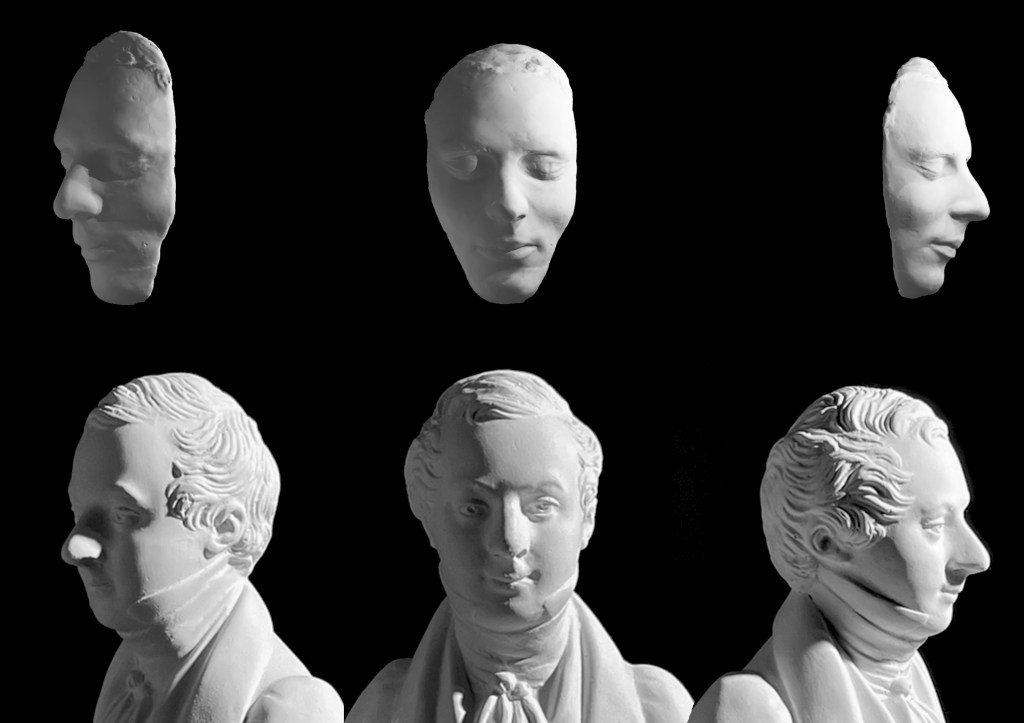
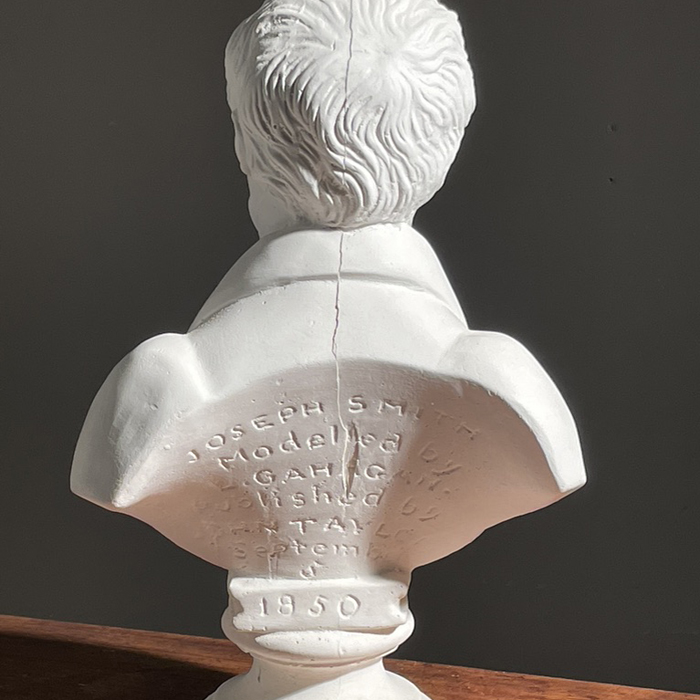
Note wherein the bust—which is affected by some amount of recall idealization, lacking negative details implicit to realism—differs from the distorted elements of the death mask:
| Death Mask | Gahagan Bust |
|---|---|
| Protruding cheeks | Flatter, more natural cheeks |
| Flattened brow ridge | Smooth, supple skin on brow ridge |
| Flat eyebrows pressed down on brow | Arched eyebrows above brow ridge |
| Flattened, pursed lips | Full, puckered lips |
| Skin pushed back/receded at chin | Chin more forward |
Outside of corrected features from what can be compared to on the death mask, the Gahagan bust also shows the following notable details that align with the drawings and paintings previously analyzed:
- Hair brushed from left to right on top; forward on sides
- Parted hair is combed down at the part and then forward against the skin, again indicating a greased or pomade look
- Forehead visible going deep into the natural hairline, indicating a recessed hairline
- Sloping forehead
- Hooded eyelids, or the combination of large superior orbital rims and a low upper eyelid creases
- Accentuated almond shaped eyes
- Indication of significant bottom eyelids
- Fully visible ears
- Vertical or popped shirt collar
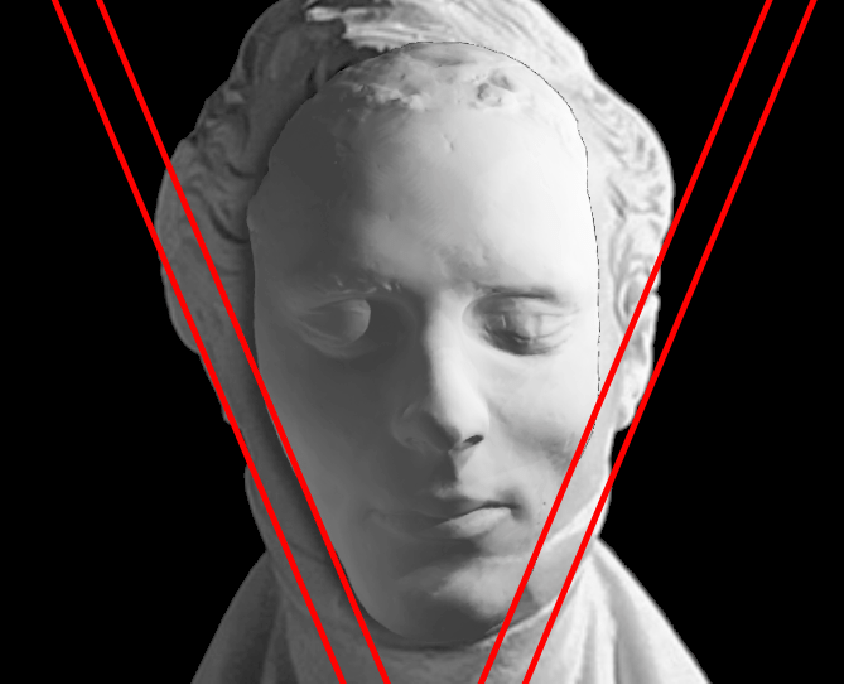
The last important thing to note is that the bust shows a much wider/fuller head than what might be assumed by looking at the death mask alone (see illustration below). This is an important fact to consider when looking at potential likenesses of Joseph Smith as it might be assumed that Joseph Smith’s chin would have looked relatively narrow when in fact the full aspect could only be visually appreciated by seeing the portion of the jawline that extends toward the neck and back of the head.
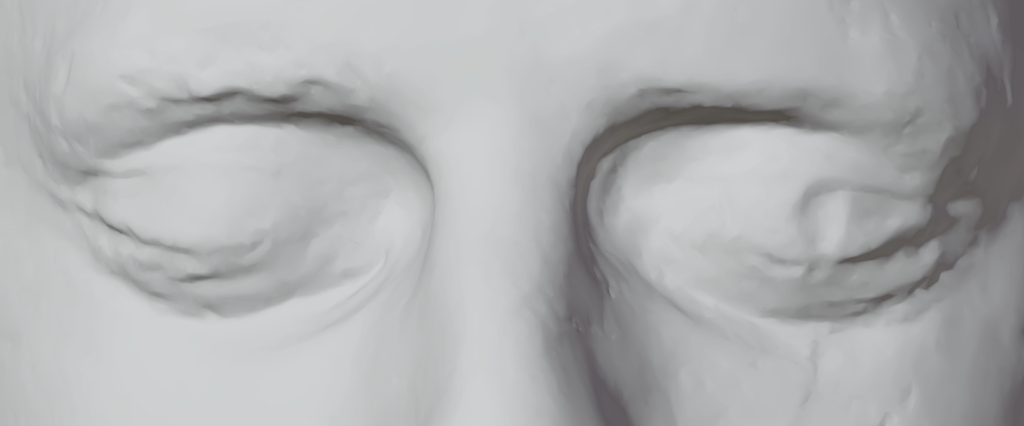
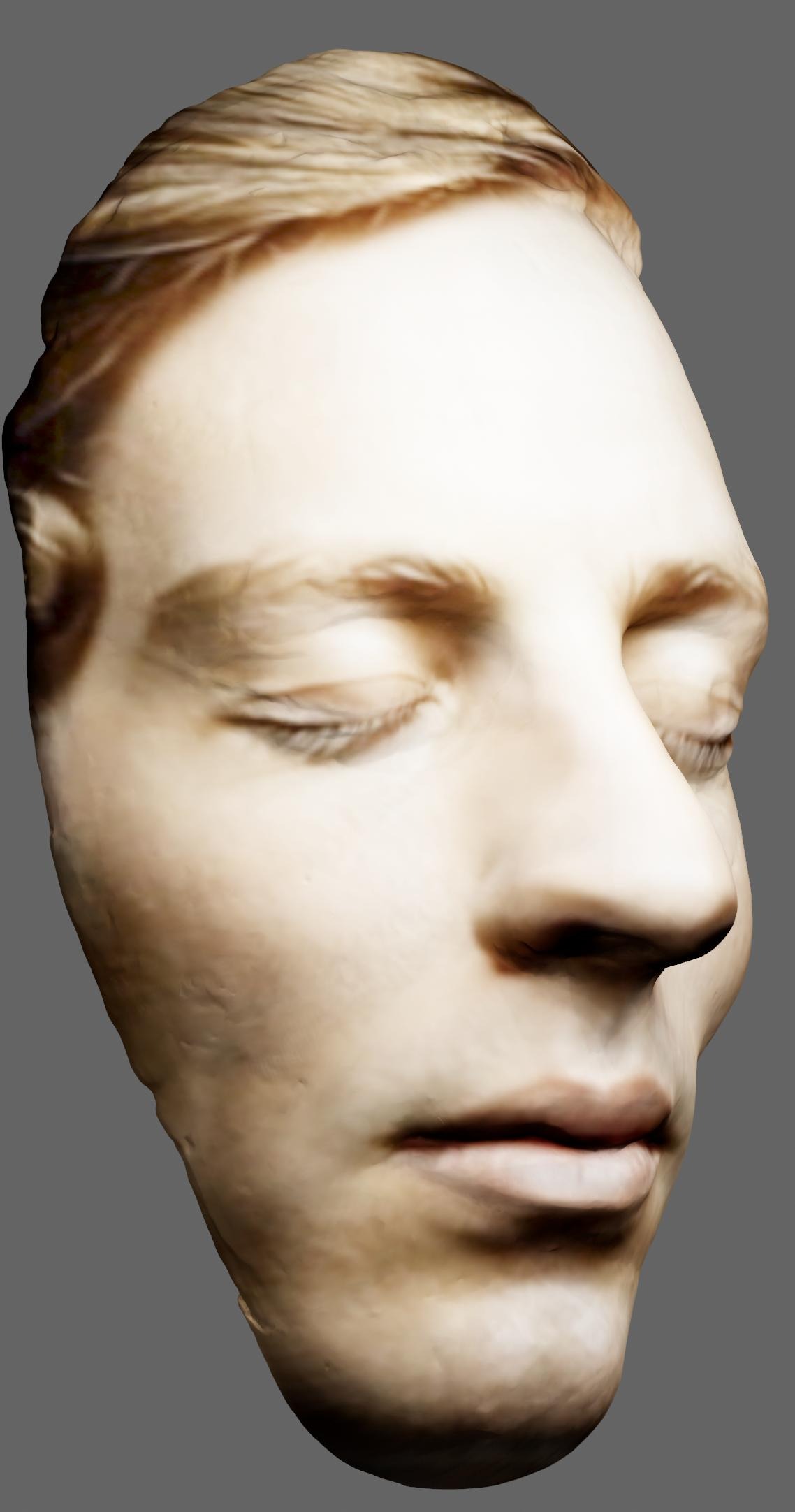
The death mask also reveals subtle evidence of some of the features noted in the artistic depictions of the prophet noted above. For example, there is a fold in the upper eyelid that is only present in the closed eyes of people who have hooded eyelids (or the combination of a of a large superior orbital rim and a low upper eyelid crease). This is most readily apparent on the right eye as there seems to have been some damage to the death mask on the left side. (Also note that apparently the plaster cast on the prophet’s face failed to capture clear detail in the interior corners of the eyes as the lines and features flatten out completely.)
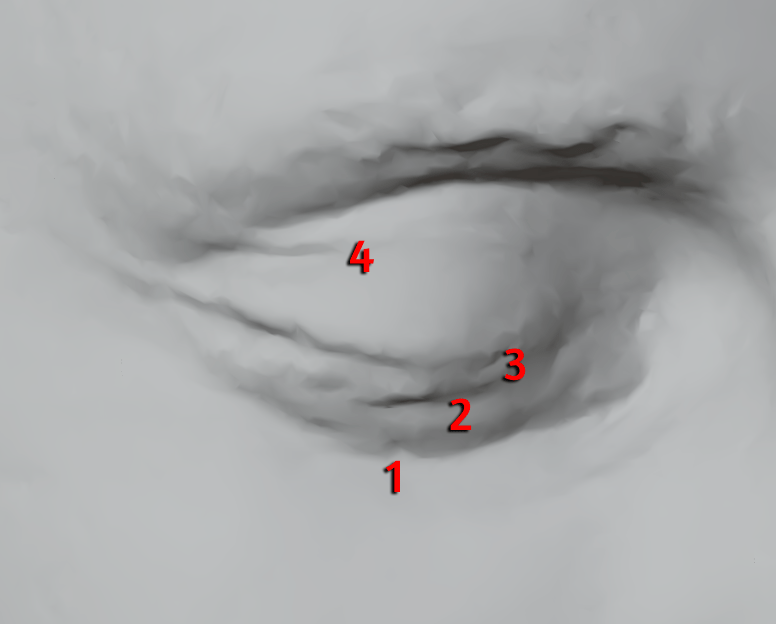
Careful observation shows four ridges on the right eye: (1) the bottom of the bottom eyelid (showing a fairly substantial lid); (2) a ridge created by the pressure of his eyelashes (remember, they were described as quite long); (3) the main palpebral fissure (where the eye opens), which extends quite far past the corner of the eye, lending to the accentuation of the almond eye shape; and (4) the superior palpebral sulcus, which also extends away and above the corner of the eye and onto the brow ridge, indicating some degree of eyelid “hooding.”
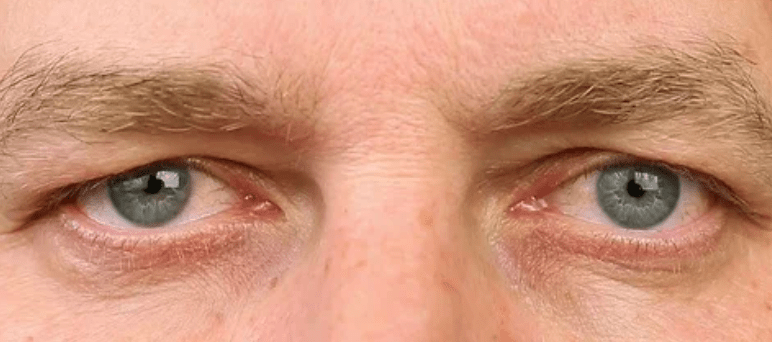
If we compare this to an example from a living man in a modern photo who has hooded eyelids, we can see how that an additional line appears on the upper eyelid when closed. This is a rather extreme example, but it shows that though the prophet’s eyes had a far lesser degree of hooding (his upper eyelids being more visible than this man’s), there is still indication that hooding was present (the example of this living also man lacks the thick bottom eyelids the prophet had).

The death mask also shows that it would have been unlikely that Joseph would have combed his hair backward on top of his head:
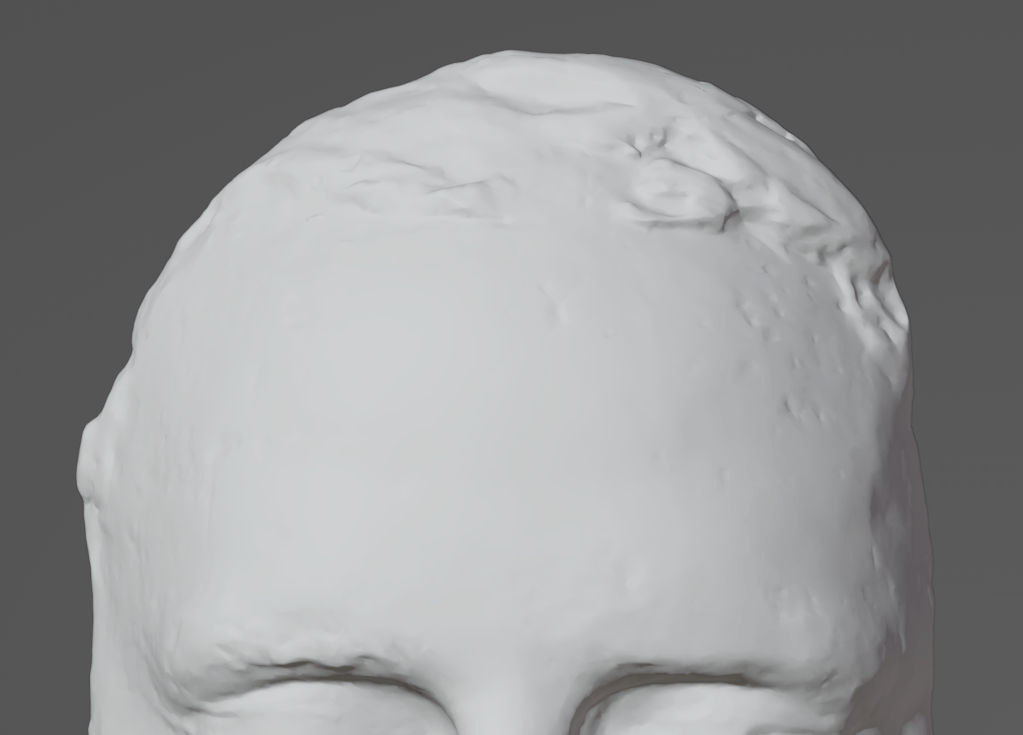
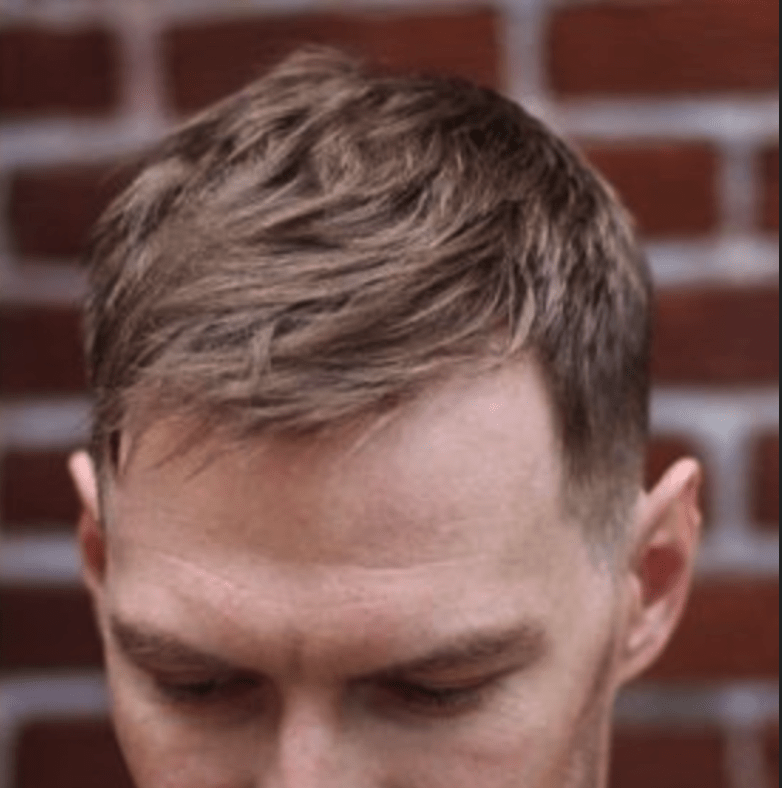
Mark Staker, senior researcher for the historic sites group of The Church of Jesus Christ of Latter-day Saints’ history department in Salt Lake City, noted that the prophet “had a permanent bald spot (where a patch of hair was torn out) that he combed to hide that spot” (link). The death mask appears to show this ‘bald spot’ toward the front edge of his hairline. Though observers described Joseph’s hair as being receded, according to the paintings this was apparently only the case at the corners where he parted his hair (like the man in the photo below). The death mask shows a fairly normal hair line (the corners being beyond the reach of the plaster) with the exception of the bald spot.

Therefore, given the proximity of the scalp damage to the hairline, we should expect that Joseph would have combed his hair not only to the side, to part his hair, but also toward the front in order to ‘hide that spot.’ A modern take on covering receding hair while combing forward could look like the below example:
4. Family Features: Pure Reality, Probable Accuracy
To this point, we’ve assembled a host of features common to descriptions and depictions of the prophet—those traits that we would expect to see on his true likeness. One last analysis we should make is to Joseph Smith’s living relatives whose photographs do exist and can be examined. Though it may be said that a person’s traits are sometimes visible in a sibling or a child—at least in part—it’s seldom the case that someone’s niece, nephew, aunt, uncle, or grandchild bears much resemblance to oneself. For that reason, this analysis will be limited to photographs of Joseph’s siblings (when young enough to present some analyzable features) and adult children.
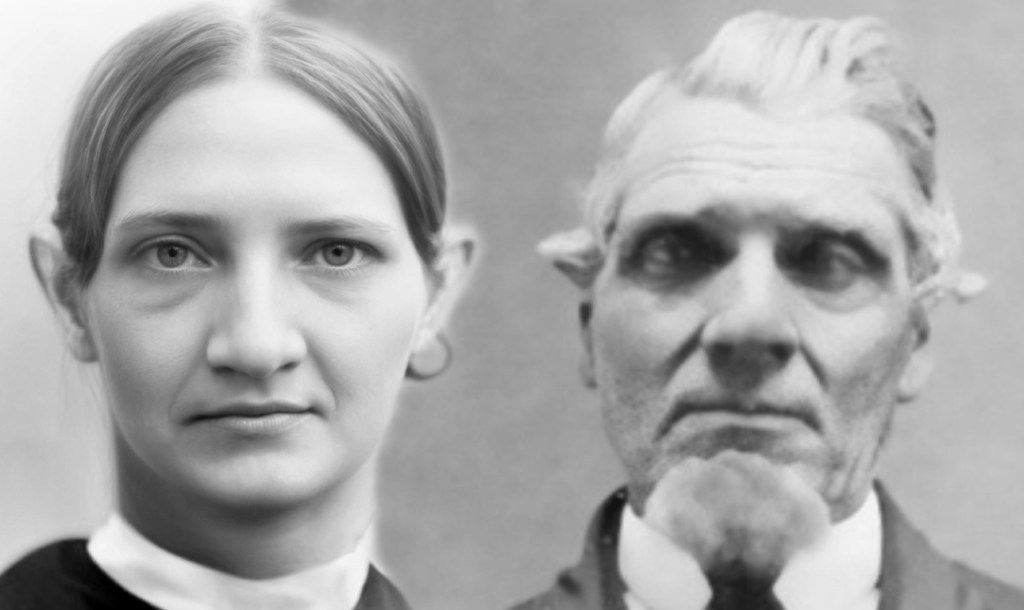
Joseph Smith’s photographed siblings in relative youth: Lucy and William
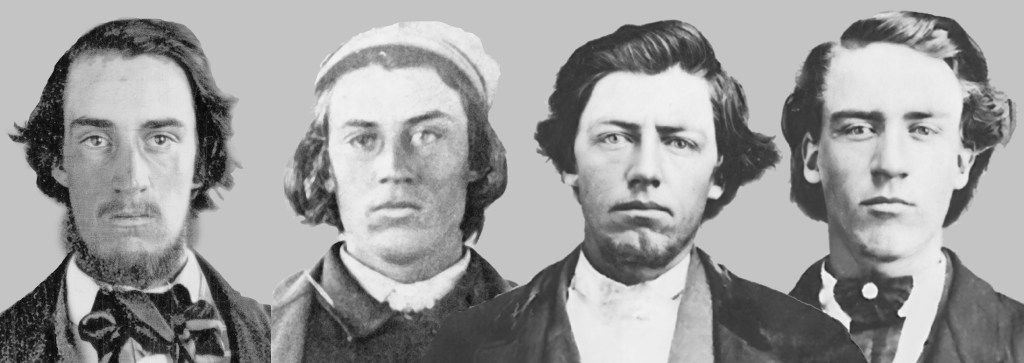
Joseph and Emma’s surviving adult sons: Joseph, Frederick, Alexander, and David
The ability to derive Joseph’s precise likeness from the semblance of his relatives would be impossible, therefore the approach that will be taken here will be to identify overlapping multigenerational traits. These traits would be assumed to be passed down from “generation 0″—Joseph, Lucy, and William’s parents: Joseph Smith Sr. and Lucy Mack Smith—through the prophet (the missing person in “generation 1”) and into “generation 2.” Thus traits common to at least one member of “generation 1” and a majority of “generation 2” have a higher likelihood of at least having been a genotype through the prophet if not a phenotype in deed.
Smooth forehead
Generation 1:
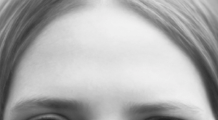
Generation 2:
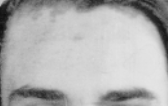
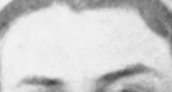
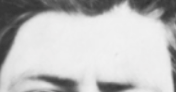
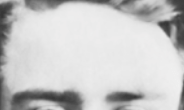
Both generations show a tendency toward an unfurled brow (with the exception of William, who, like Hyrum, showed a tendency toward furling). Not also that there does not appear to be any strong indication of glabellar lines either in the boys (the vertical lines between the eyebrows), except in Alexander—and even that is not extremely pronounced. Of course, the boys were young in these photos and would not necessarily expect to show significant worry lines, yet the absence is consistent with the prophet’s physical descriptions.
Straight, slightly arched eyebrows
Generation 1:
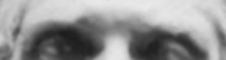
Generation 2:

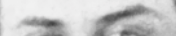
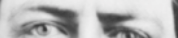
There does appear to be a consistent tendency toward brows that start of level (or slightly rising, as with Frederick), which then drop downward past the corner of the eye, framing the orbital rim area slightly. William’s picture makes it more difficult to ascertain how pronounced this was with him or not, but it does appear to follow the same general pattern.
Hooded eyelid, or the combination of large superior orbital rims and low palpebral sulci (upper eyelid creases)
Generation 1:


Generation 2:
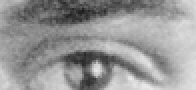
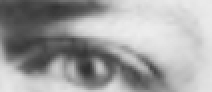
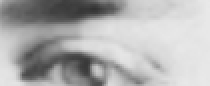
Though with William it is more difficult to tell whether the highlight under his brow is a thick upper eye lid or a bit of hooding, the fact that Lucy demonstrates significant hooding, along with some of the boys, lends to the latter being the case for William too. The degree of hooding varies among the boy, Alexander showing the most, but none of the boys show any tendency toward high palpebral sulci, or fully exposed upper eyelids, except maybe in the case of Frederick who may have taken after Emma’s genes in this case (see Emma’s eye below, which demonstrated a high palpebral sulcus).
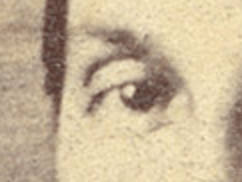
Significant bottom eyelid presence
Generation 1:

Generation 2:
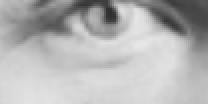

In William and in two of the boys, a significant or “puffy” bottom eyelid is clearly visible. This is not visible in Lucy or Joseph III, but it is consistent with the death mask lines, showing that the prophet would be expected to have thick bottom eyelids like the men highlighted here.
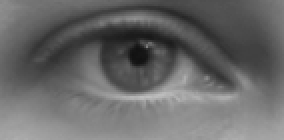
Accentuated almond shaped eyes
Generation 1:
Generation 2:

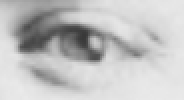
William’s photo shaded his eyes a little too much to enable analysis of his eye shape fully, but Lucy and two of the boys appear to show accentuated almond eyes. All three of the samples above show a tendency toward a deep and highly visible lacrimal caruncle (the pink inner corner of the eye).
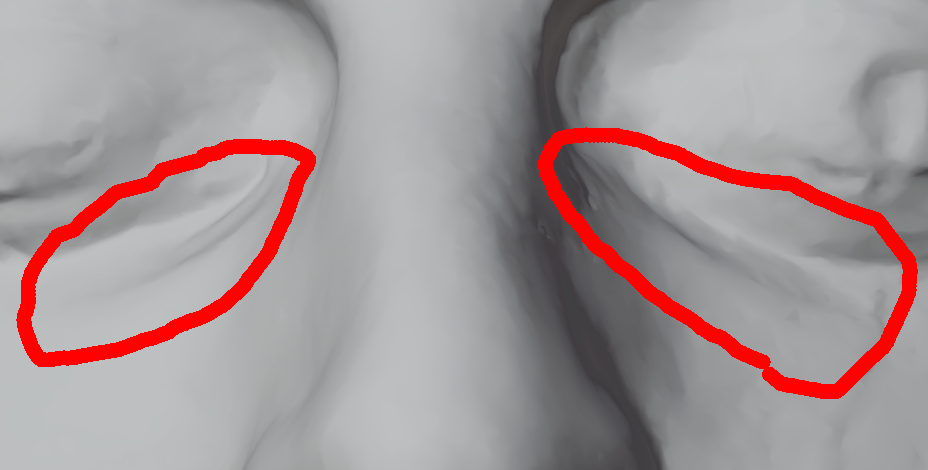
Clear tear troughs or nasojugal grooves
Generation 1:
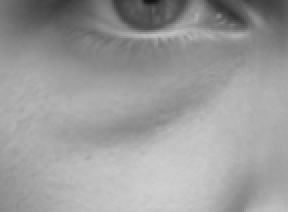
Generation 2:
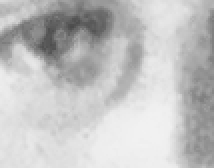
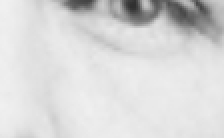
Almost every person (David apparently excepted) shows indication of tear troughs or nasojugal grooves, some quite deeply. In the case of Joseph III and Frederick, the angle of the grooves appears quite steep, but in Lucy and William the grooves are less steep. Which of these angles Joseph would have had seems only to be hinted at by the death mask, but the indication appears more like his siblings in the shallow aspect:
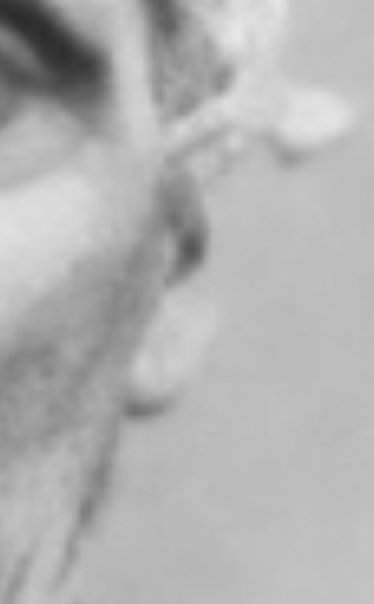
Wide lateral extension of large earlobes with well-defined scapha
Generation 1:
Generation 2:
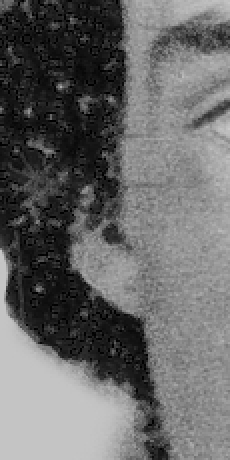
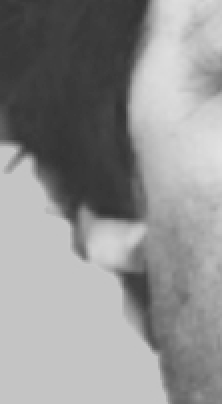
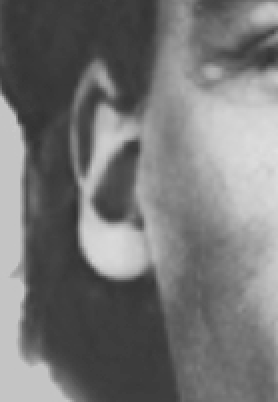
Lucy’s ears take a different shape from the others, the tops pointing away from her head, but William and the three boys whose ears are visible appear to not share that trait. Instead, their ears remain close to the head toward the top (consistent with Joseph being able to half-conceal his ears in some depictions) while flaring out toward the earlobes, which are prominent. Most of the scapha and antihelixes are not visible, but David appears to have sharp scapha, consistent with Joseph’s painted depictions.
Prominent cheek bones narrowing toward the mouth
Generation 1:


Generation 2:
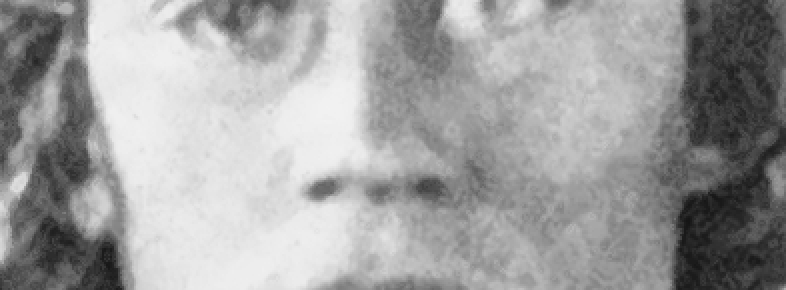
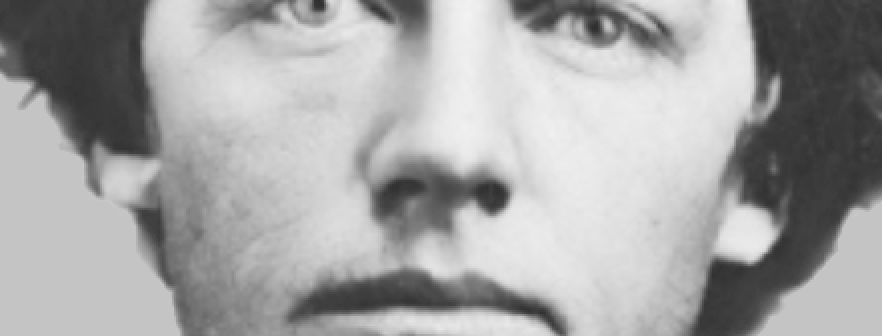
Joseph III and David appear to have rather narrow cheek bones that cause their faces to appear mostly the same width from top to bottom, but Lucy and William, from “generation 1,” and Frederick and Alexander, from “generation 2,” all show wide cheek bones that cause the face to appear to narrow from the eyes down. This is more in keeping with the overall shape presented by the David Rogers face-on painting and even the Gahagan bust to some degree.
Long, straight nose with little-to-no alar creasing
Generation 1:
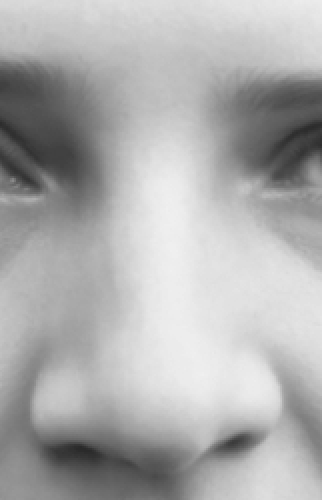
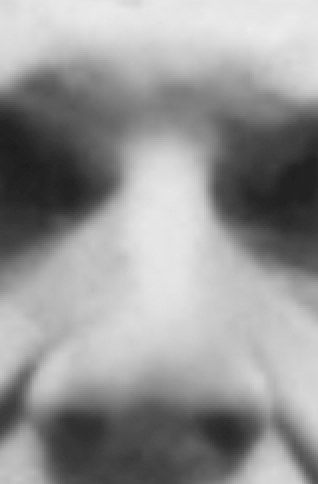
Generation 2:
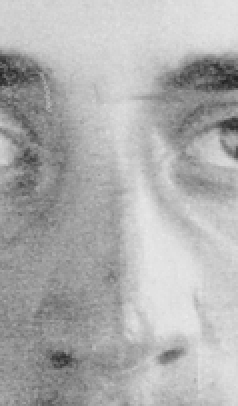
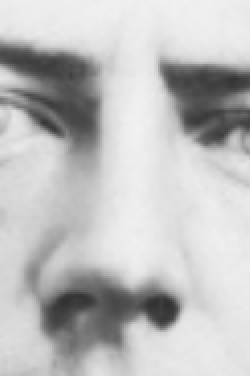
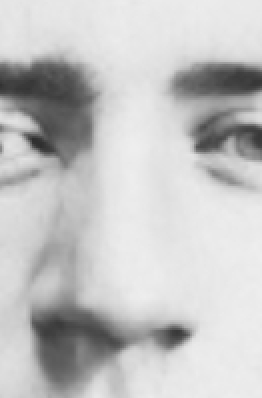
With the exception of Frederick, whose photo is somewhat poorer and is difficult to analyze in this regard (it appears flatter, perhaps taking after Emma whose nose was not as long as Joseph’s), the whole family shows a near copy-and-paste of the long, straight nose with little-to-no alar creasing across the top, the nostrils instead gently widening from the top of the nose down toward the bottom.
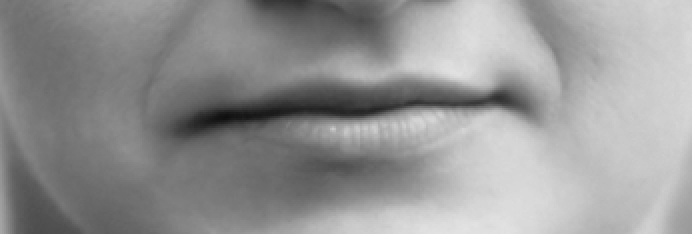
Mouth is not overly narrow
Generation 1:
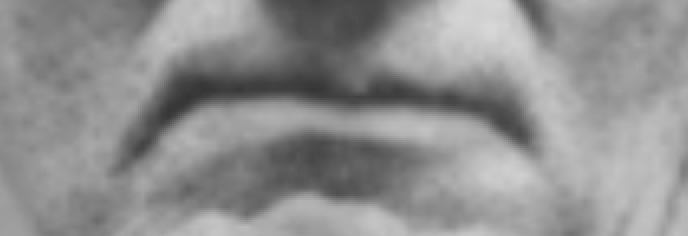
Generation 2:
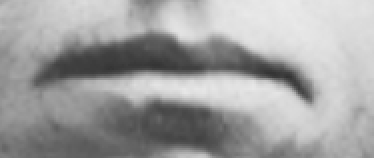
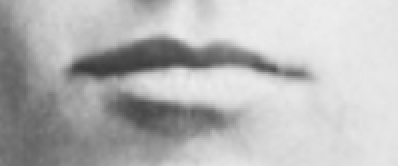
Most of the family here show fairly wide mouths not at all in keeping with the exaggerated and disproportionately small mouth of the David Rogers face-on painting. The death mask too shows that the mouth is not overly narrow either, but, due to the alteration in consequence of the plaster mask process, the full protrusion of the lips is not visible. Although Joseph III and Frederick appear to have narrow mouths, they, as with the other two brothers, do show a natural resting pucker to their mouths.
Conclusion
None of these traits should be surprising or even new inasmuch as we have derived their presence from descriptions and depictions of the prophet prior to this section. Seeing them present in Joseph’s closest blood relatives with photographic records, however, enables us to reasonably confirm that the descriptions and depictions bear those features out faithful to the genetic truth. In other words, we should reliably expect to see those same above features in a true image of the prophet Joseph Smith. And in a couple instances, such as the glabellar line and narrow mouth made famous in the David Rogers painting, we have seen that genetically speaking it is reasonable to expect Joseph to differ from his depictions in some ways.
Lucian Foster & the Presidential Campaign Back East
In the midst of Joseph Smith’s 1844 campaign run for President of the United States of America, a man named Lucian Foster moved to Nauvoo, setting up residence in late April 1844. Foster was unlike most people who came to Nauvoo and set up shop to do business—Foster brought with him a brand new technology not yet seen in the Illinois frontier, let alone in the Mormon capital city: the camera.
The camera that Foster brought was of the earliest variety, patented by Louis Daguerre only a few years earlier in France. The “daguerreotype” camera, as it was called, was the first version of a technology that promised to capture the details of the world for future generations to behold and enjoy, preserving a moment in time in perfect likeness to the way it appeared in reality. The technology was a marvel at the time, and that marvel had come to do business in Navuoo.
Though Foster moved to Nauvoo in April of 1844, his first advertisement for his photography studio did not hit newspapers until August. In the meantime, Foster lived at the Smith Mansion House (Joseph Smith’s own home, which functioned at times like a small hotel or bed and breakfast for travelers). Though no direct documentary evidence exists to establish the fact that Foster photographed the prophet during his stay at the Mansion House (it did not take as long as sitting for a painting, after all, and may not have merited a journal entry), it is believed that this proximity combined with Joseph’s natural interest in emerging technology would have produced a photographic session between the two.
From this rumored session onward, sleuths have tried to find Foster’s image of the prophet to no satisfying avail. Though interesting candidates have cropped up from time to time, most usually fail to align to the expected attributes as detailed above in this post. But it is a certainty that Foster took portraits in Nauvoo, and it is even known that he took them for a certainty on sixth plate glass, thanks to the recent discovery of a photo taken of Wilford Woodruff on August 23rd, 1844:
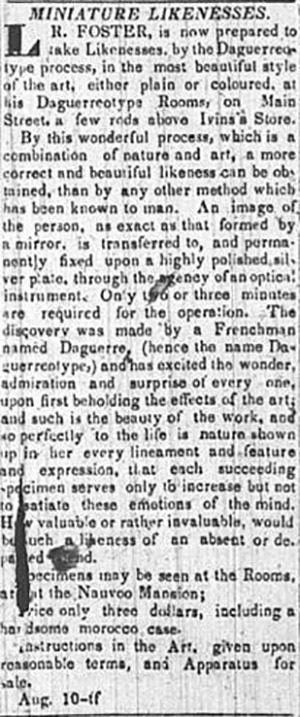
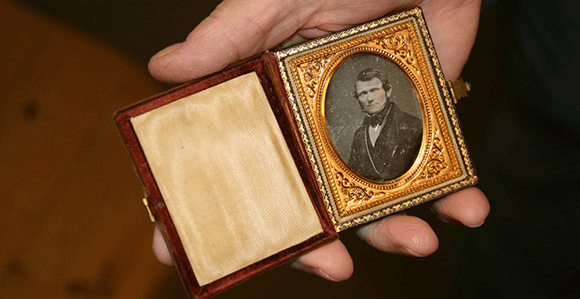
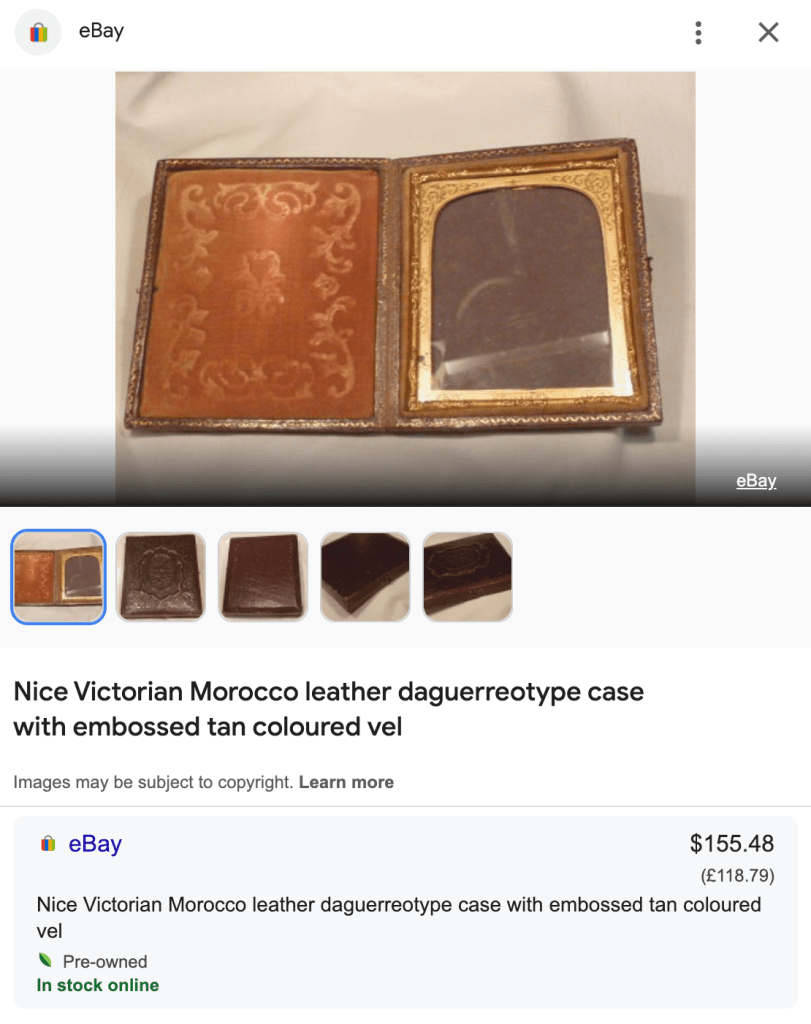
A ‘sixth plate’ refers to one of the several sizes of image that could have been produced by the early daguerreotype process (in a rough sense being one-sixth the size of a full plate, or large format, image). This is extraordinary evidence, for Woodruff’s photo is the only surviving original daguerreotype portrait to come out of Nauvoo. Per Foster’s ad, the price was “only three dollars, including a handsome morocco case” (about $125 in 2024). Below is an example of that style of case, which cases are sought after collectibles today even without a photo enclosed:
Whether Foster took a photo of Joseph for personal use or official use is not documented. It’s entirely possible that both cases are true. Foster had connections in the east and may have proposed sending a photo of the prophet there for lithographic reproduction in his presidential tracts (this very thing took place with his would-be opponent, Henry Clay, with a daguerreotype taken in April 1844 and the promotional campaign lithograph printed in October 1844). If such a photo had been taken, sending it away for duplication would not have seemed a reckless endeavor at the time as no one could have guessed that Joseph’s life was to end right at that time on June 27th, 1844. If the photo had already been shipped by the time Joseph died, more urgent matters in Nauvoo may have precluded relocating it.
Whatever happened with a possible photo in 1844, it is known that by 1846 Foster moved to New York City where he continued to do work taking photographic portraits, presumably taking his photographic equipment with him. The new technology had produced a fad and people from far and wide were seeking to have their “shadow captured” by daguerreotypists like Foster in major cities. In that milieu, it’s entirely possible that had a photo been shipped east, or taken with Foster to New York City, it—among so many other sixth plate portrait cases—was lost to time.
Knowing Brother Joseph Again
One-hundred and twenty two years later, a sundry collection of old photos were being sold to collectors at the Armory Show in New York City in 1966. An avid collector from Brazil was in attendance that day named Carlos Eugenio M. de Moura. At the show, a particular photograph—a sixth plate daguerreotype—caught Moura’s attention. It showed a peculiar looking man, a mixture of youth and age in his face, wearing 1840s clothing staring past the camera in a broad-shouldered, regal pose. Thinking him to be some important statesman of the past, Moura bought the photo—and its morocco leather case—for about ten dollars.
Moura passed away in 2023, but before his death his collection of photographs—including the mysterious 1840s daguerreotype of an unknown man—was obtained by the Paulista Museum of the University of Sao Paolo, Brazil.
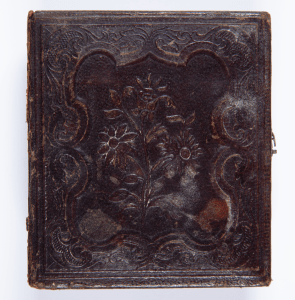
Moura’s collection was catalogued in a book in 1983 entitled Coleção Carlos Eugênio Marcondes de Moura (retratos fotográficos), which made itself into the hands of a Mormon familiar with the descriptions and depictions of Joseph Smith. This individual’s job enabled him to handle almost every book of Latin-American art intended for distribution in the United States. As fate would have it, the mysterious daguerreotype (which was ironically originally from the United States) would be printed in the Brazilian book. As the individual said of his experience when he turned the page and saw the unidentified man:
“I turned a page and suddenly was face-to-face with the strangest daguerrotype I had ever seen… Unlike the other pictures, which were placed several to a page and had very short text descriptions, this particular daguerrotype was placed on the entire left-hand page and the author of the book used the entire opposite page to write about it. It was obvious that this daguerrotype was considered worthy of more notice than the others. And it did stand out, for it was…set into a frame with a hinged cover, so that it could be closed and carried around and then flipped open to show to people. But the most startling aspect of it was that it appeared to be Joseph Smith himself.”
From this chance encounter, this individual made several attempts in the early 2000s to try and obtain a higher resolution copy from the museum, though to no avail. The trail dried up there, and others who heard of a Joseph Smith image from Brazil discounted the thought simply on the preposterous sound of such provenance alone.
That is, until this year.
In mid 2024, 180 years after the photo was taken, the author of this blog post was able to successfully obtain high resolution copies and written permission to reproduce them on the internet via this blog. With extensive photo restoration experience and many years of research to back him, the author now presents the mysterious daguerreotype as a serious candidate for the true likeness of the Prophet Joseph Smith.
Behold, the man who communed with Jehovah!
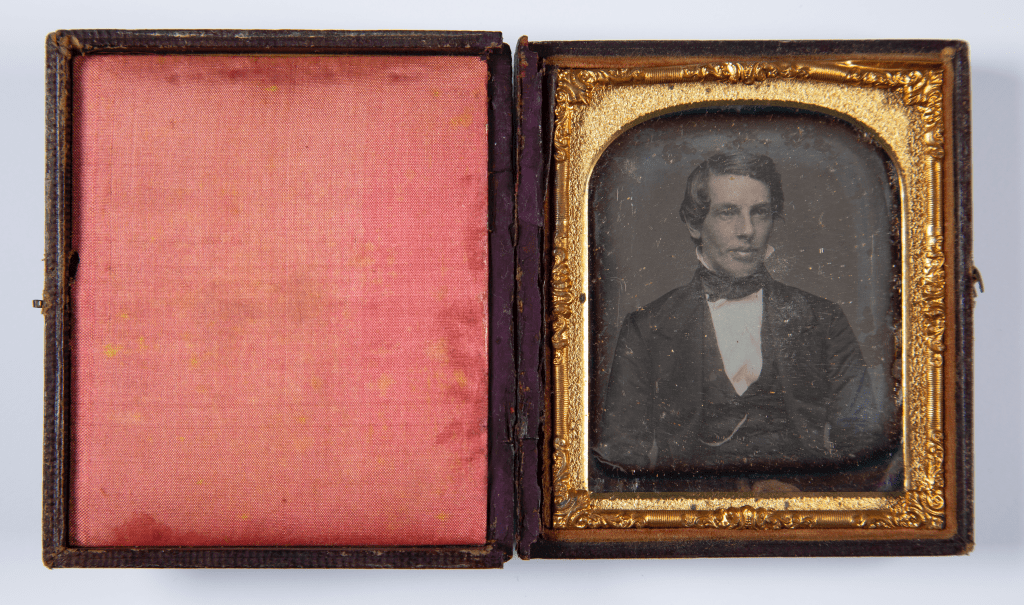
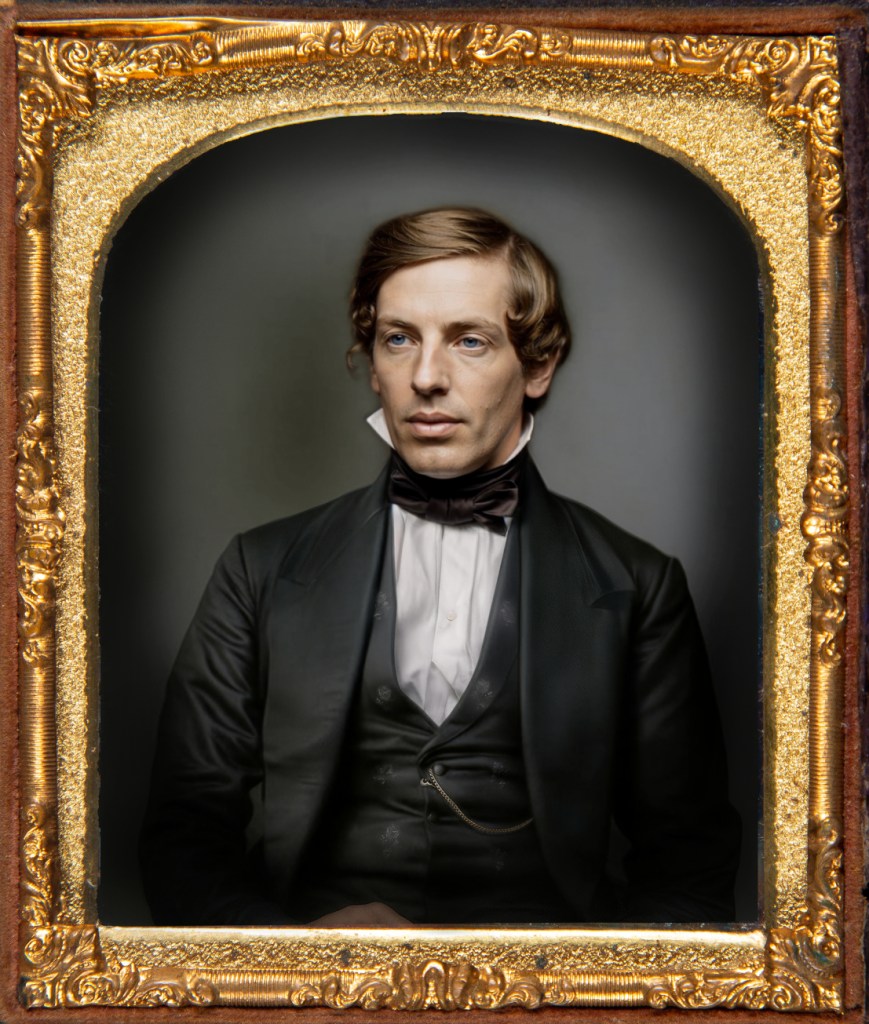
The size of the photo is precisely that of a sixth-plate and is contained in a gilded morocco leather case with a plain silk backing opposite the image (to protect the glass from being scratched). As noted by comparing this with the sample eBay listing above, there is variation in daguerreotype cases inasmuch as each was handmade, usually by jewelers who made cases for jewelry, with some cases having silk or velvet and usually various designs embossed on the fabric. In this case, the backing is plain, precisely as was the case for Wilford Woodruff’s image. Though correlation in this case is not undeniable proof of association, it is a verifiable fact that this daguerreotype in every physical regard is the exact kind that Foster was producing in Nauvoo in 1844.
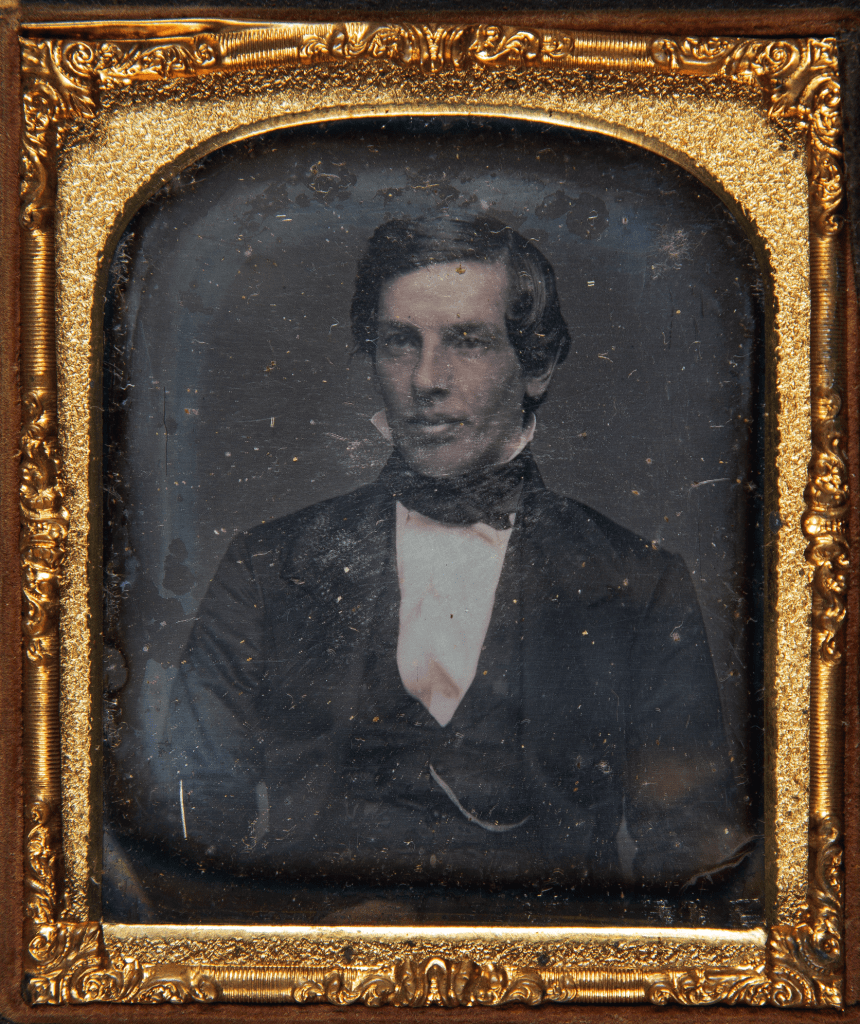
Note that daguerreotype images, especially early images and portrait images, were laterally reversed compared to real life due to the simplistic nature of the lens device. Reversing prisms were later adapted for us in capturing an image true to life, but they required the photographer to take the image at a 90º angle to the subject, which was awkward for human portraiture and thus avoided. The other solution was to take a daguerreotype of the daguerreotype (reversing the reversed image), but this was wasteful of time and resource and seldom done. In this case, the image is original and thus has to be flipped to present the man behind the glass as he would have appeared in real life.
Daguerreotype images were designed to be viewed not in direct light, but in angled light, the case backing often doubling as a shade to enhance the viewing experience. Hence details in the image sometimes required the viewer to angle the photo when examining them to ensure that they could perceive the most detail. With the advent of computerized imaging software, the details otherwise lost in lack of brightness or contrast can be restored even when viewing the image directly.
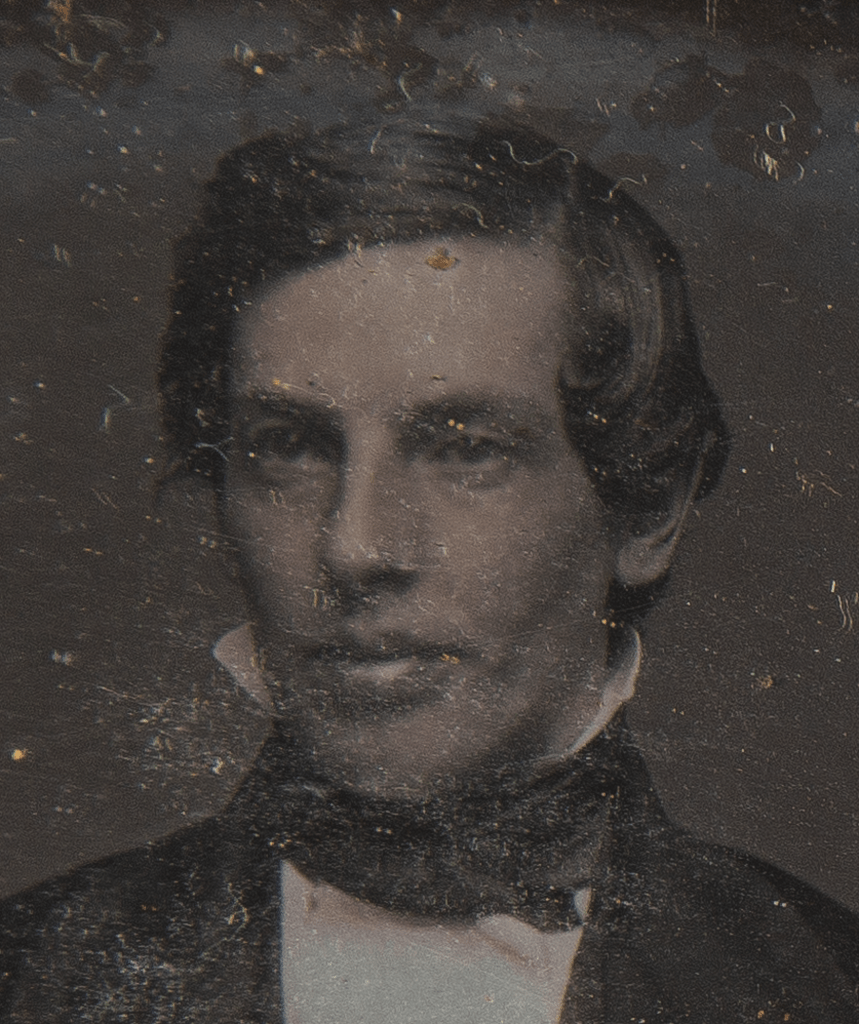
Over time, the image has accumulated small hairs, scratches, and dust that have somewhat obscured the face within the image. Yet high fidelity details remain to be discovered thanks to the analogue photographic process invented by Daguerre. A chemical process that caused mercury molecules to retain their position on a film substrate of an iodized silver plate once exposed to light meant that, as long as the original and developed film plate was kept behind glass, the image could retain its details indefinitely.
Through careful digital restoration, the following details have been preserved and noted for evaluation against the traits noted above through (1) physical descriptions, (2) artistic depictions, (3) the death mask, and (4) expected familial traits:

Hair brushed from left to right on top; forward on sides
Of all customs of appearance attributed to the prophet by even the most modern saints familiar with his image, the parted hair that was combed forward on the sides has to be one of the most recognizable. Some depict the hair on top going backward while others depict his hair on top going sideways, but historical analysis of his life drawings, identification of his damaged scalp area, and historian’s commentary have combined to show that his hair on top was combed to the side and a bit forward, just as the man in the daguerreotype.
Forehead visible going deep into the natural hairline, indicating a recessed hairline
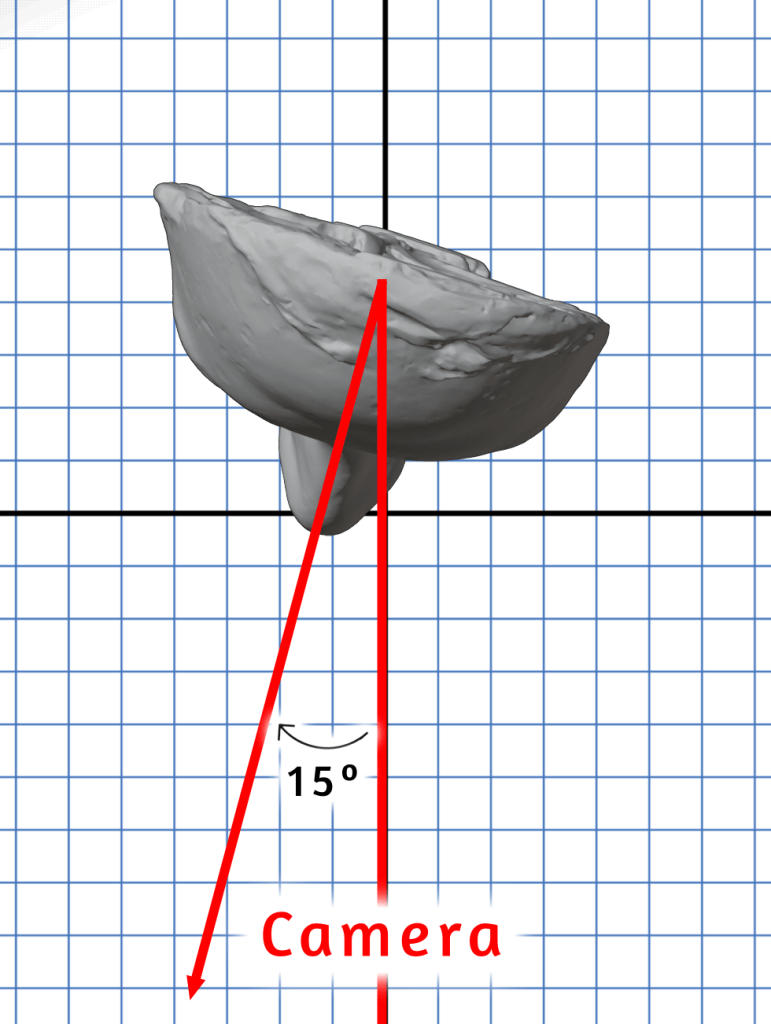
Analysis of the photo shows that the man in the daguerreotype is turned at a 15º angle away to his right from the camera, which is actually complimentary to many features that would only be apparent from a more sideways aspect (such as his profile drawings). Those softened features include: his receded hairline, his sloped forehead, and his receded chin. Nevertheless, the man in the daguerreotype shows thinning hair into his part as expected. The hair on top resting close to the forehead shows too some lessened volume perhaps at the hairline overall.
Sloping forehead
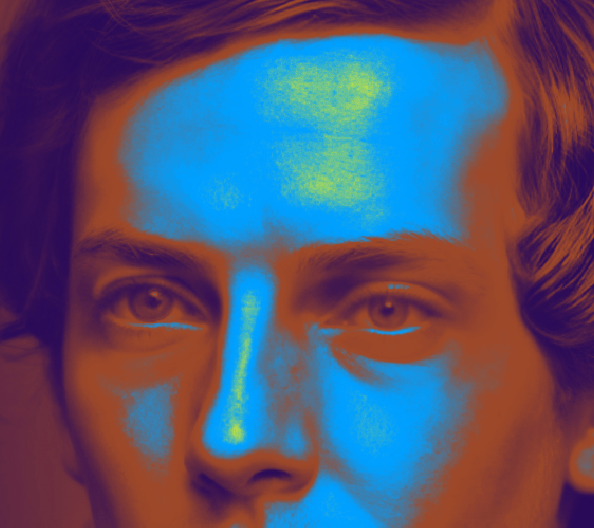
Again, this is a feature that would not be readily apparent from a 15º angle of a face, and even less so face-on. The only visual clue that the man in the daguerreotype has a sloped forehead is the difference in tonal luminance compared to more vertical features. For example, the fact that his forehead is brighter by far than his cheeks, and that it is the same brightness as his nose, shows that his forehead is at a steeper angle relative to the source light and that this angle essentially continues across to his nose. As exemplified in the contour analysis of his face, this is exactly what we would expect to see if this man were Joseph Smith.
Smooth Forehead
The man in the daguerreotype shows no furrow in his brow, as descriptions and depictions indicate was true of the prophet.
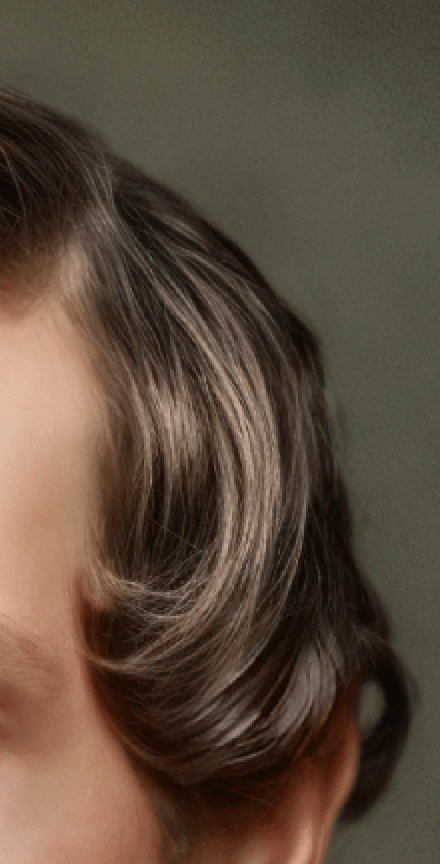
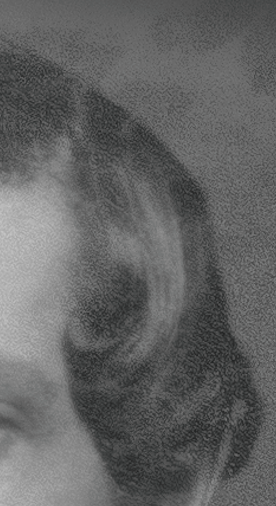
Parted hair is combed down at the part and then forward against the skin, again indicating a greased or pomade look
This feature requires special mention because it is such a striking and memorable aspect to Joseph Smith’s appearance. The restored image above does not quite do the original photo justice inasmuch as I had difficulty in recreating the look of pomade hair with a relative paucity of modern examples to reference. The hair in the original daguerreotype appeared almost clumped in its brushed aspect so as to leave no doubt that it was greased or treated with a pomade to achieve the look.
Hair on sides is cut to a sharp edge
This too is best noted in the original daguerreotype as I again had trouble making the edge look sharp enough in my restored image. There is no doubt but that the man in the daguerreotype not only combed his greased hair into a flat shape against the side of his head but also then used scissors to trim that shape into a sharp edge or straight line, which then fanned out as it rested. This is precisely Joseph Smith’s haircut.
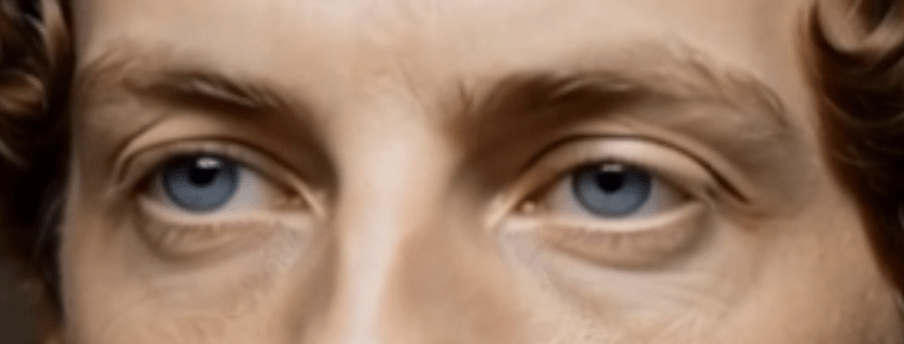
Straight, slightly arched eyebrows
There is a striking similarity to the eyebrows of the prophet’s sons, particularly Frederick and Alexander, as will as a correlation with the shape of the left and right eyebrows as captured in the David Rogers face-on painting, where the prophet’s right eyebrow appears to arch more sharply while his left demonstrates more concentrated hair in the inner half and a more frayed or feathered look on the outside half.
Hooded eyelid, or the combination of a large superior orbital rim and a low upper eyelid crease
Though not heavily hooded, the amount of hooding is consistent with painted depictions and the majority of the prophet’s sons. That said, the man in the daguerreotype appears to have considerably more hooding occurring over his right eye. It is not known what accounts for this disparity, but it is reasonable to speculate that Joseph’s eyes would have shown signs of past trauma from his history of persecutions. That this differs from the sharp orbital rim edges seen on the death mask is not surprising given the above study on face deformation during plaster casting. The soft tissue surrounding Joseph’s eyes—especially that of the hooded skin above the eyes when closed—would appear unnaturally sharp due to the added surface pressure. This was also seen with the Gahagan bust comparison to the death mask.
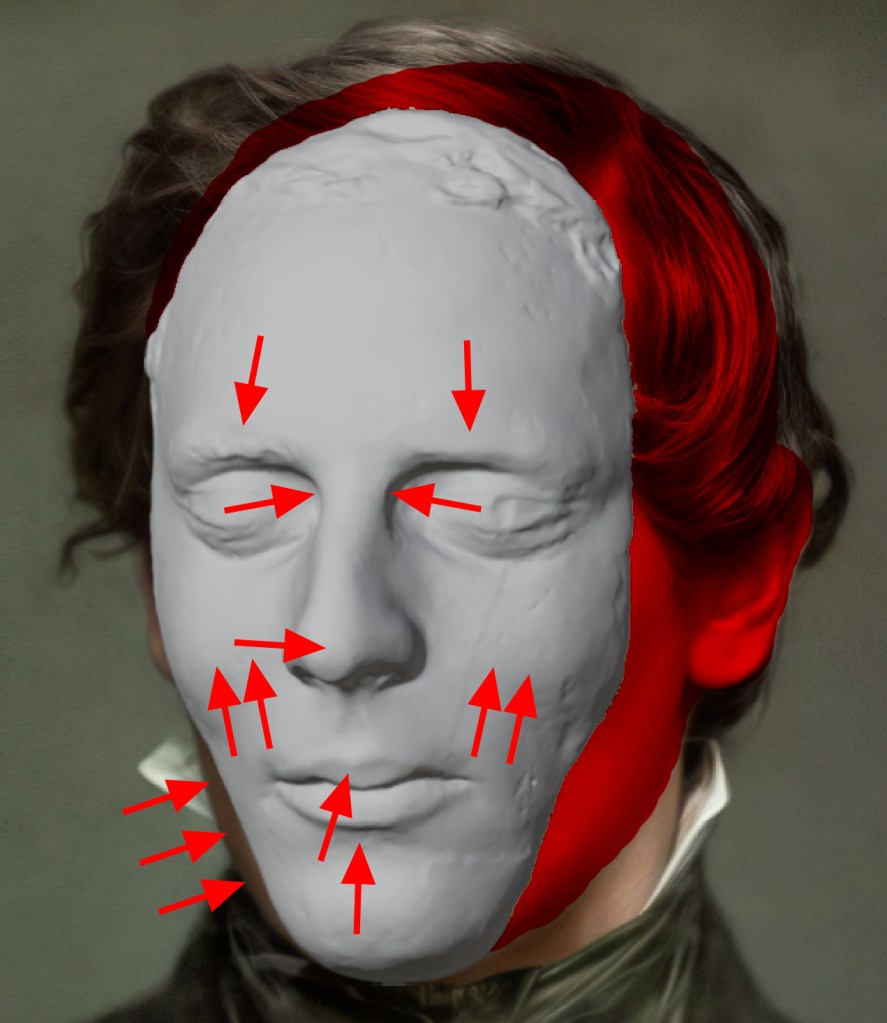
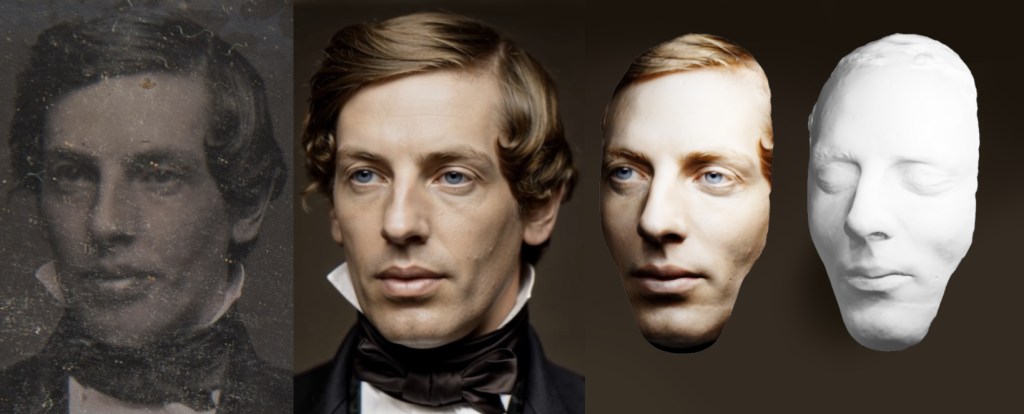
This illustration overlays the prophet’s death mask on the face of the man in the daguerreotype. The red arrows indicate areas and general direction of deformation consistent precisely with the areas found to be most susceptible to alteration in the plaster cast study cited above. Note how that the mask only represents a small portion of the man’s whole head (in red).
Significant bottom eyelid presence
The man in the daguerreotype shows significant lower eyelids, as depictions indicate was true of the prophet and as the eyes of his family members also attested.
Accentuated almond shaped eyes
As with the lower eyelids, the accentuated almond shaped eyes—marked by the presence of deep and highly exposed lacrimal caruncles (the pink eye corner area)—are consistent with depictions and genetic indications. This is a major argument in favor of this image being Joseph above other contenders—including the now famous “locket” daguerreotype—as others do not always have eyes that share this feature or that align to the wide eyes seen on the death mask. These eyes, however, match in all regards.
Clear tear troughs or nasojugal grooves
This feature is consistent with depictions and genetic indications as well, being borne almost universally in the family members analyzed above. What’s further remarkable is the lesser physical extent to which the man in the daguerreotype possesses these features, apparently terminating or becoming less noticeable a short distance from the interior corners of the eye, unlike many of the family members who show longer troughs, which is precisely as depicted in the David Rogers face-on painting.
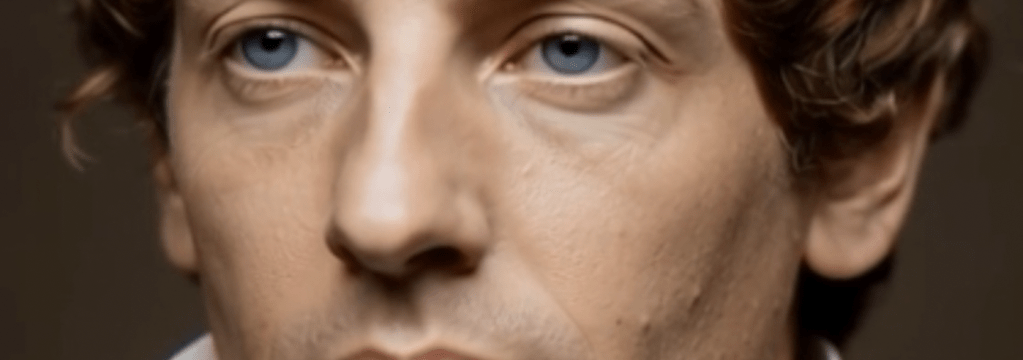
Wide lateral extension of large earlobes with well-defined scapha
The detached large earlobes that are visible on both sides of the head of the man in the daguerreotype (despite the 15º angle to the camera!) along with the prominent tight positioning of the antihelix to the sharply defined scapha are a picture perfect match to the David Rogers profile painting, the only painting to show careful attention to detail to Joseph Smith’s ear composition. As shown above, this is also consistent with genetic indications.
Prominent cheek bones narrowing toward the mouth
As with the David Rogers face-on painting and as with genetic indications, the angle and size of the cheekbones are consistent with what would be expected from a hoped image of the prophet. Furthermore, when compared to the death mask (see photo below), the cheekbones are found to match exactly, though the death mask does not preserve the natural shape of the face as it would have hung off said cheekbones (being roughly 3mm depressed, as expected).
Many perfections can be noted in comparing the death mask to the photograph beyond just the size and prominence of the cheekbones, including but not limited to:
- The hidden and damaged hairline (Joseph’s hair would have been pulled back for the plaster mask)
- The contour of the orbital rims
- The relative prominence of the left temple
- Overall proportions
Long, straight nose with little-to-no alar creasing
As demonstrated in the image above, the nose too is a match to the death mask, not only in length and position, but also in volume and three-dimensionality as verifiable thanks to the 15º offset of the portrait angle. Most other contenders for images of the prophet are face-on images and provide no way to match the volume and angle of the nose, if they even match the death mask’s proportions in the first place at all. This photograph accomplishes them all.
Additionally, it should be noted that the alar creases on the death mask are slightly more noticeable than those of the man in the daguerreotype. This is to expected given the plaster mask study cited above. When the tip of a nose is depressed, the nostrils are correspondingly deformed as the soft tissue of the tip applies pressure to surrounding soft tissue, causing the nostrils to take on a slightly more flared position. Remove the pressure, and the nostrils would relax and less alar creasing would be visible, precisely as with the man in the daguerreotype.
Mouth is not overly narrow
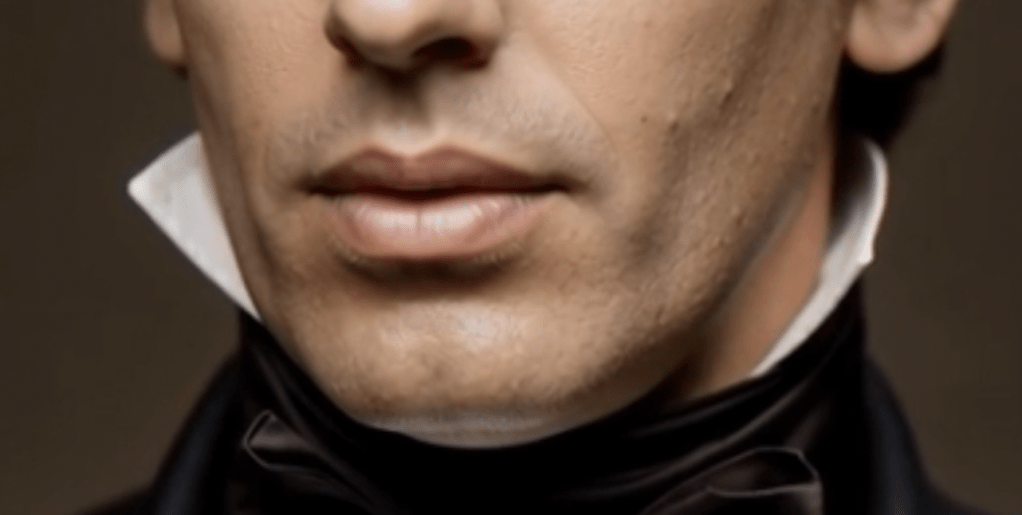
The mouth of the man in the daguerreotype is not as small or narrow as the David Rogers face-on photo would suggest it should be (which is inhumanly proportioned, as discussed above), but it is in harmony with the mouths seen on the prophet’s family members. What may account for individuals describing the prophet’s mouth as being narrow may be the relative narrowness of the wet-dry line (where the lip turns pink) of the bottom lip compared to the length of the overall oral fissure. The upper lip is long and thick as others described.
Full and protruding bottom lip
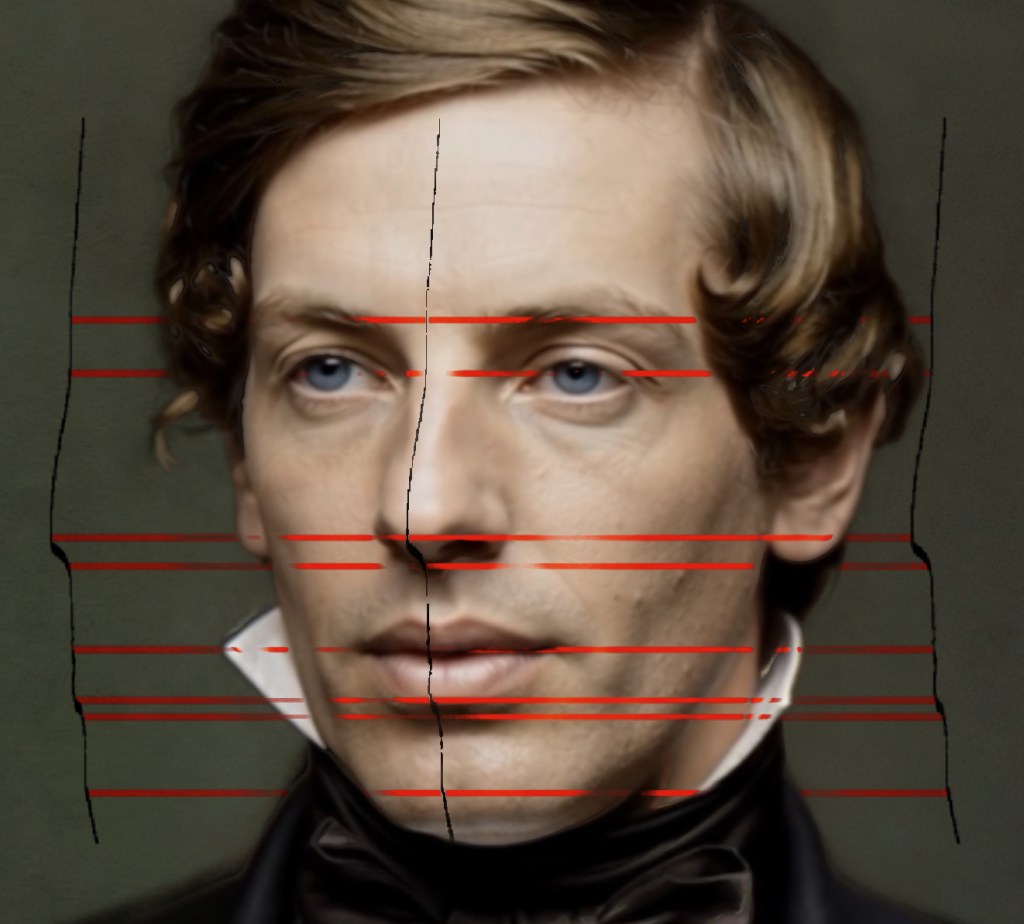
To verify that the bottom lip of the man in the daguerreotype is in correct proportion to the shape of the prophet’s depicted mouth as analyzed above, the outline of his profile as traced while he was living was rotated 15º in 3D space to provide a centerline that could be compared to the features of the photo. This provided a means of verifying the size and position of the lips inasmuch as the death mask should be regarded as inaccurate in this area in particular.
The results (shown below) revealed that not only were the lips correctly positioned and proportioned, but also that they were correctly located relative to all other features along the profile, which all also happened to be perfectly proportioned as well, including the ridge to the top of the nose, the angle of the nose down to the tip, the base of the nose, the oral fissure, the mentolabal sulcus, and the most forward point of the chin.
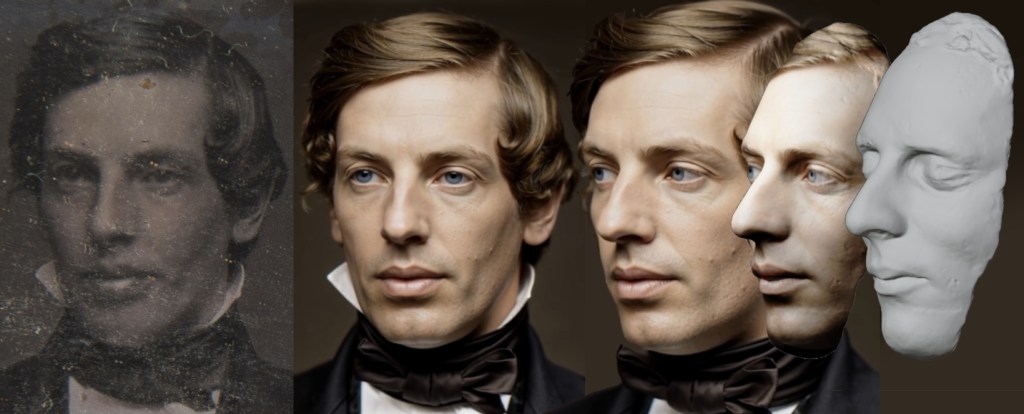
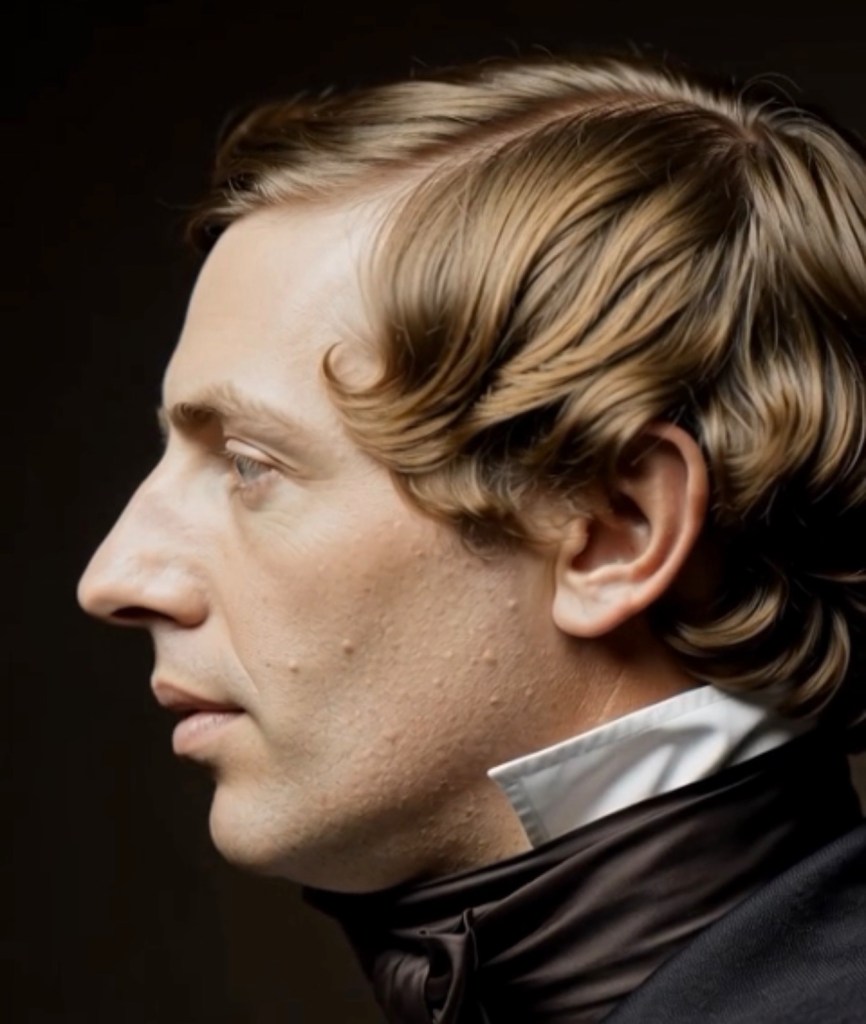
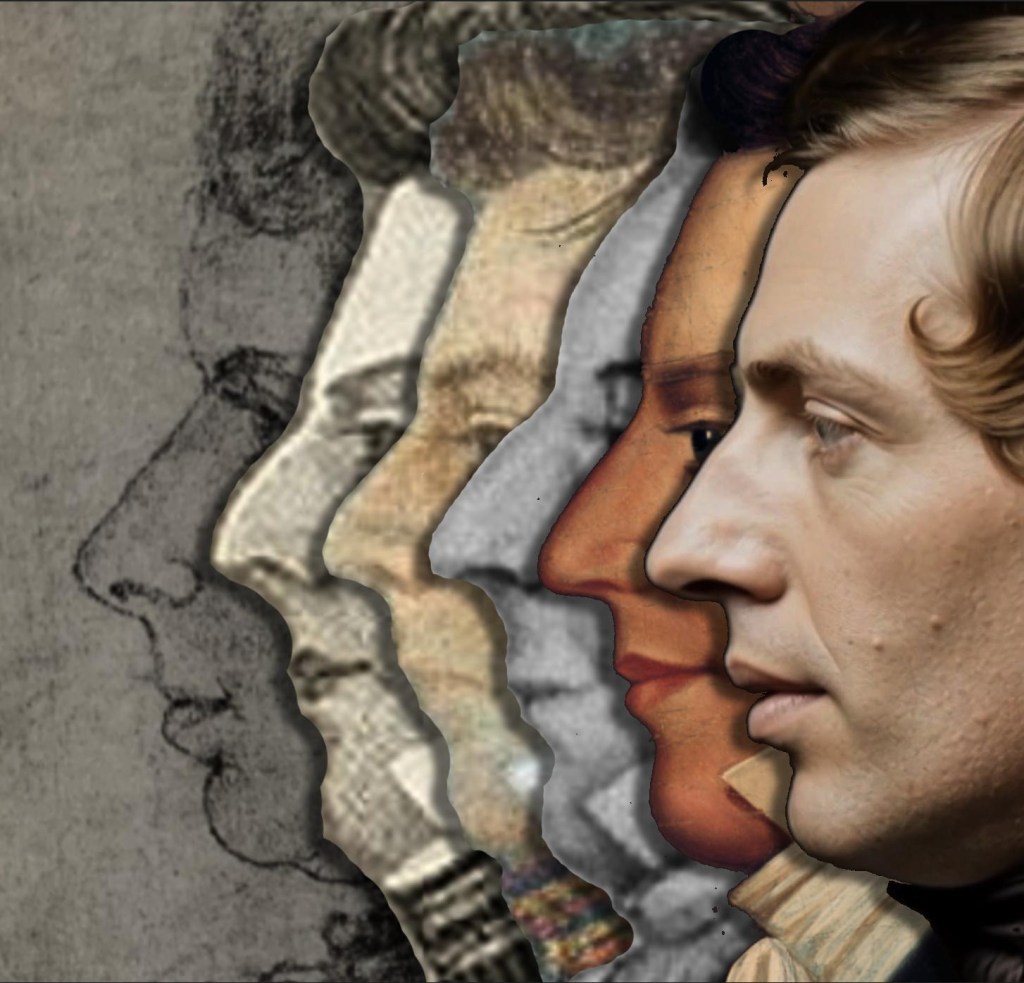
Apparent hypertrophy of the left orbicularis oris muscle
In accord with the strange and striking feature of the David Rogers face-on painting is the appearance of an apparently hypertrophied left orbicularis oris muscle at the corner of the mouth. Consistent with the painting of the prophet, it appears only at the man’s left mouth corner and not at his right. The odds of this feature being in alignment with all other traits noted thus far is unknown yet seemingly remote.
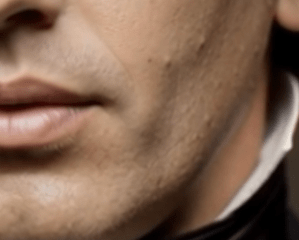
It is worth noting also that the David Rogers painting depicts a strangely angled mentolabial sulcus perhaps reflecting the artist’s observation that the prophet’s chin had slightly more mass to his left side than the right. Whether this was what was meant by the artist may remain unknown, but the man in the daguerreotype appears to share this ever-so-slight unequal distribution of chin mass.
Vertical or popped shirt collars
This is almost extra credit as it may not bear any sway on the prophet’s physical image if one exists, but it should be noted that every depiction of the prophet executed in his lifetime and shortly after always showed him with popped or vertical shirt collars. Used as a sure dating mechanism for men’s fashion in the first half of the 19th century, it is not really surprising that this should be seen on the man in the daguerreotype, but had he appeared with his collars folded down there would be a case for less assurance overall.
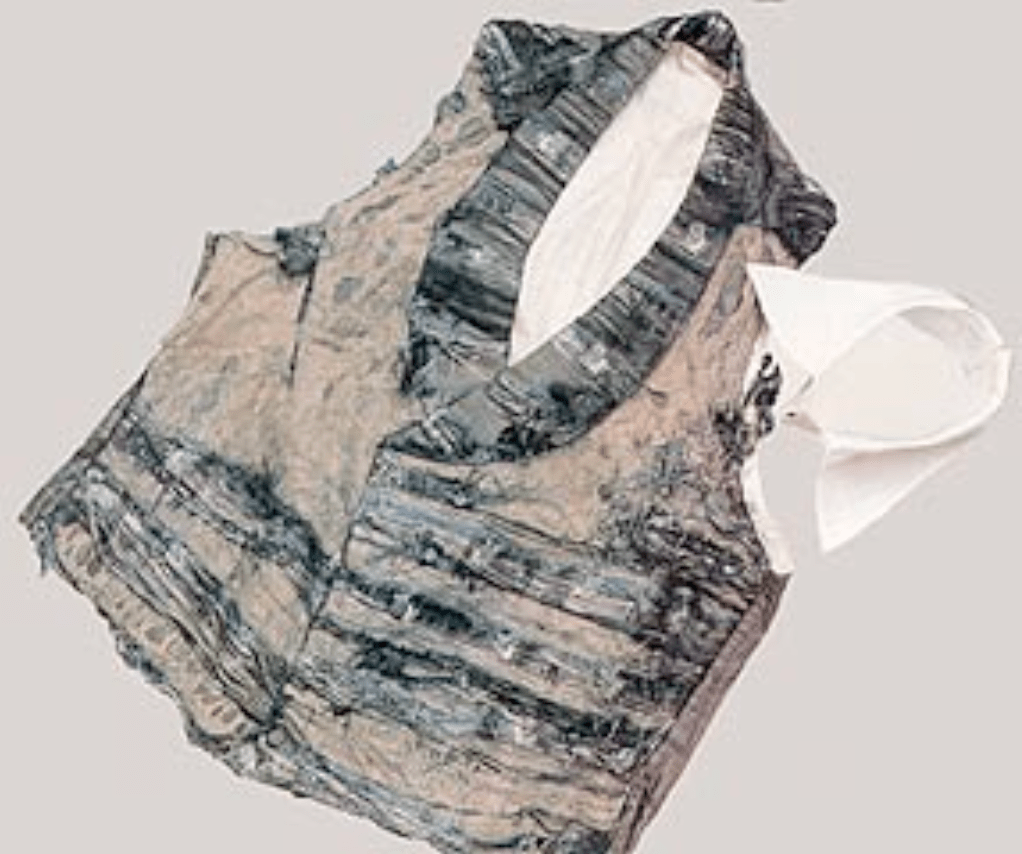
As seen in this photo of a vest and set of collars that belonged to the prophet, he wore very long collars that would have reached apparently nigh up to his mouth level when turned vertically. The vest appears tattered but would have been all black silk originally with embroidered blue and white flowers patterned throughout. The vest in the photo shows some indication of embroidery, but the detail is too small and too obscured by damage to confirm that they are definitely flowers.
Death Cannot Conquer the Hero Again
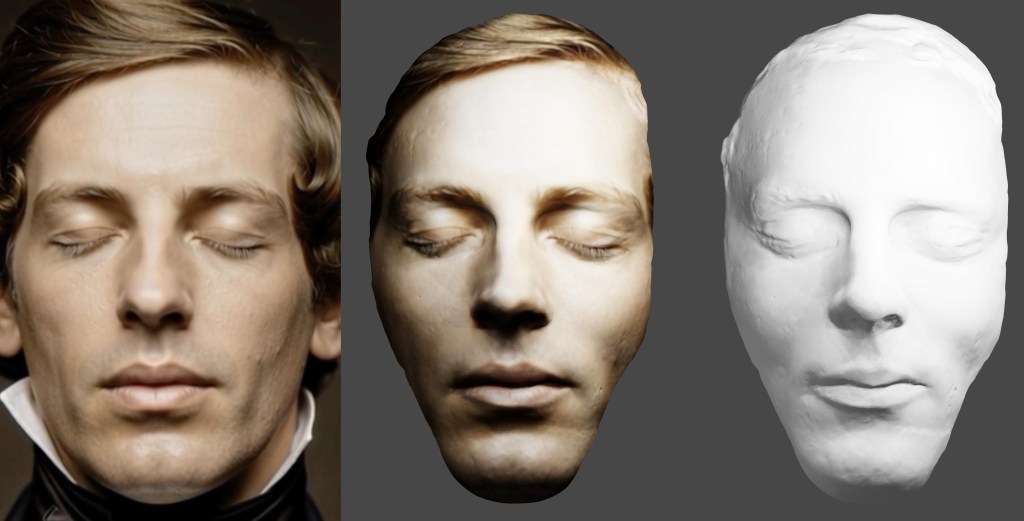
For curiosity’s sake, the image of the man was projected three dimensionally onto the death mask and then rotated to face the camera straight on. The result is captivating indeed, the eyes seeming to merely open as opposed to shifting in some contrived way; the brow appears to rest naturally and even the hairs seem to issue from the roots, falling forward across the bald spot; the lips, though pressed backward in a more pursed way than they would have been in life, show no problem accommodating the full and massive mouth of the prophet when looked at from the front. In short, there seems to be nothing unnatural at all about the life the man in the daguerreotype brings to the smiling death mask.
It will be recalled that in the conclusion of the physical descriptions given of the prophet, it was determined that a likely candidate of his likeness would need to surmount the seemingly impossible task of reconciling or fulfilling all the seemingly contradictory elements of his described appearance. Do we not see all these things at once in the curious visage of this anonymous stranger?
| described attribute | opposite described attribute |
|---|---|
| Not attractive, unrefined | Fine looking man |
| Set-back, beetle-browed, eagle eyes | Eyes not deeply located, prominent |
| Full, protruding upper lip & fleshy mouth | Thin lips |
| Recessed chin; narrow facial angle | Broad, square chin |
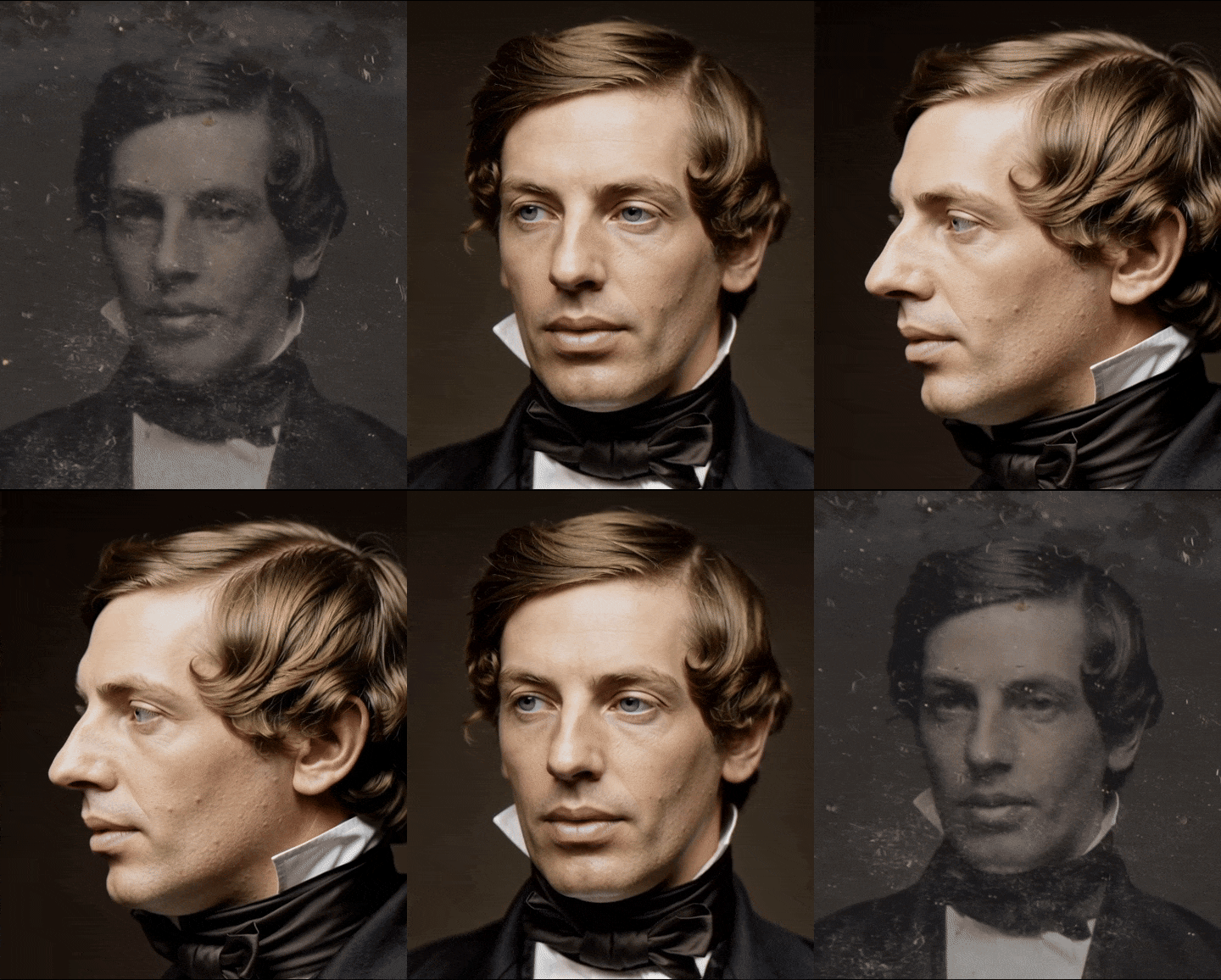
Indeed there does seem to be something strange about his face—if indeed this is Joseph Smith—that allows all the described and depicted traits to merge together in one whole. Having come all the way down the scale of descending idealism and ascending reality, we should not be surprised that in the likeness of the prophet we see imperfection and even physical flaws. After all, when the mythos is dispelled, he was ultimately a man subject to the vicissitudes of life (though more than most could comprehend). And yet there is something disarming in him, a guarded innocence that bespeaks a hope for a better world seen by the inner man mingled with the betrayal of the fallen world encountered by the outer man.
Hail to the prophet, ascended to heaven—millions shall know “Brother Joseph” again!
Footnote
1, 2, 3, 4: 1-28508-0000-0000– MR ANÔNIMO– HOMEM DE COLARINHO ALTO part of the collection of Museu Paulista da Universidade de São Paulo. Reproduction authorized by the Museu Paulista da Universidade de São Paulo for use on this website. Photographs by José Rosael/Hélio Nobre. Any further use requires additional authorization.
 Home | The Science of Theology
I feel the locket daguerreotype is an individual that is too old to be Joseph. Seemed to me to match none of the first hand descriptions of the prophet
LikeLike
Thank you for your comment. I agree. Another issue with the locket daguerreotype—probably the biggest issue—is that the eyes don’t match the death mask in shape or proportion. This is a recognized issue by some of the top authorities on that image, whom I have worked with in attempting a restoration of it.
LikeLike