This post is intended to be briefer than most as it’s a necessary supporting piece to another blog post I’m writing but the content is too important and impactful in its scope to simply be relegated to a footnote. Therefore I am dedicating a whole post to it for reference’s sake—both my own and the sake of any attentive readers who want to come back to just this idea again and again to digest it. Indeed, it may require several passes, due to the nature of the content and the abbreviated presentation, to comprehend the ideas fully. But I contend that the ideas presented are well worth such careful review to those interested in understanding our relation to the universe, nay, to the gods themselves.
The Chaldean Order
I was recently investigating the unusually universal naming scheme of the days of the week by cultures around the world and was intrigued by what I found. Cultures as far away from one another as the Welsh and the Japanese (that use a 7-day calendar, which is also pretty universal) always name the days of the week after the same set of planets in the same exact order. Scholarship suggests that this cycle has gone on unbroken for at least 3,000 years and very likely much longer than that. How can this be?
The answer lies in tracing the tradition to the very cradle of postdiluvian humanity: ancient Mesopotamia. Though separated by centuries, the cultures of the Sumerians and later Babylonians both prospered in this place and influenced the ancient world through their scientific and governmental accomplishments. To this ancient place we find the earliest known records of the Chaldean Order and also the foundational teachings of Abraham (who was from Ur, a Sumerian city).
The “Chaldean Order” describes the orbital hierarchy Akkadian astronomer‑priests ascribed to the known solar system. From this ordering, the names of the days of the week are still derived in modern times.
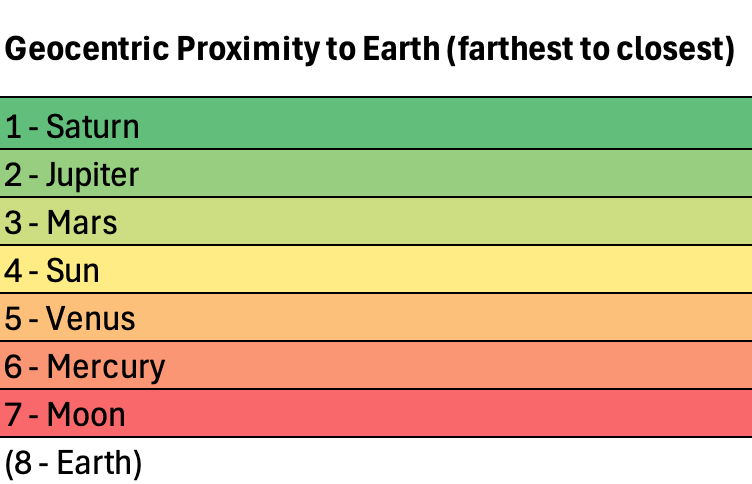
The sequence produces the days of the week by assigning each hour, in continuous count, to each planet in order from farthest to closest, cycling without interruption day to day. Because 24 is not divisible evenly by 7 (24 mod 7 = 3), the first hour of the next day falls to the planet three places forward in the sequence from the previous day’s first hour.
So if you start with Saturn (1) on one day, the next day would start with the Sun (1 + 3 = 4), the next would be the Moon (4 + 3 = 7), then Mars (7 + 3 = 10; 10 – 7 = 3), then Mercury (…6), then Jupiter (…2), then Venus (…5), and finally back to Saturn (…1). Performing this count over 7 days perfects the sequence, and if each day is named after the planet of its first hour, the result is the following order: Moon day, Mars day, Mercury day, Jupiter day, Venus day, Saturn day, and Sun day:
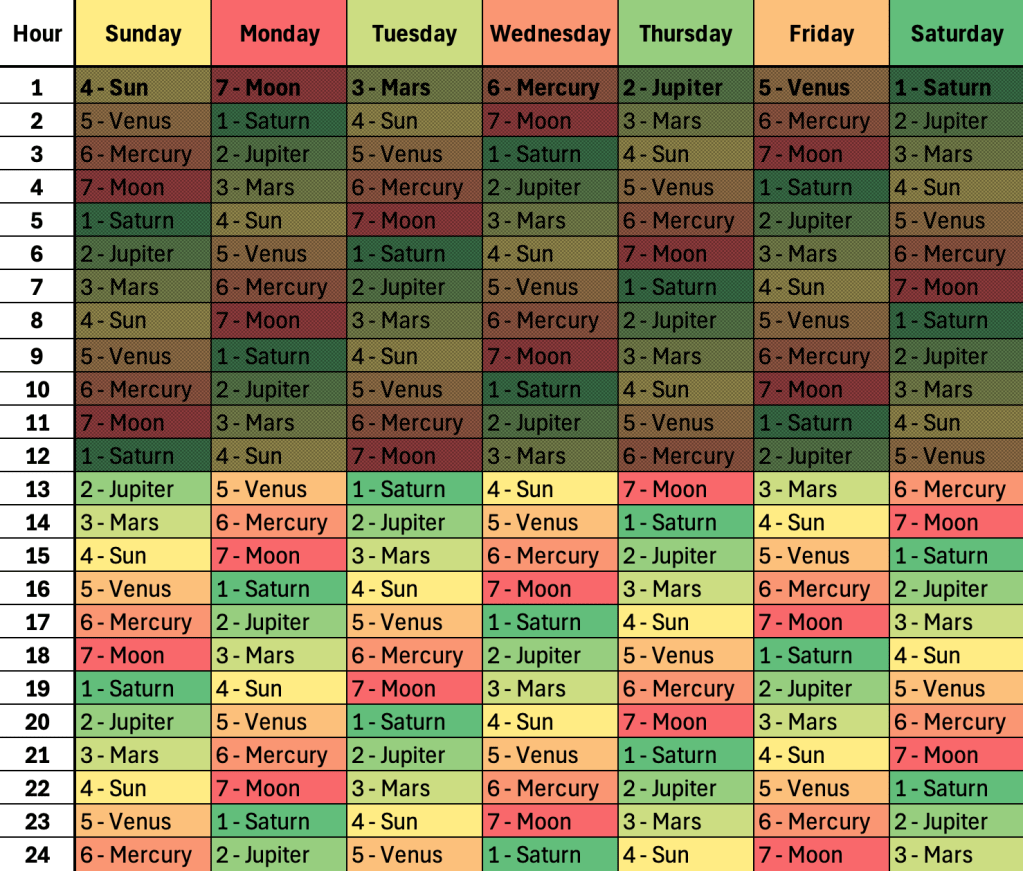
In English, the names of the days of the week are taken from Norse mythology due to the Saxon (viking) influence of its Anglo-Saxon origins, which replaced the former Latin names:
- Sunna’s day: goddess Sunna, the sun (L: Dies Solis)
- Mona’s day: god Mona (a male), the moon (L: Dies Lunae)
- Tiw’s day: god of war and justice, Mars (L: Dies Martis)
- Woden’s day: chief god of wisdom, Mercury (L: Dies Mercurii)
- Þunor’s day: Thor, god of thunder, Jupiter (L: Dies Iovis)
- Freyja’s day: goddess of love, Venus (L: Dies Veneris)
- Sætern’s day: carried from the Roman god of agriculture, Saturn (L: Dies Saturni)

Of course, neither the Saxons nor the Romans were the first to ascribe the hours of the days to the gods of the planets. Eastern cultures, like China and Japan, retained the same order of worlds as their western counterparts, albeit associated to elements, or elemental governance, instead of deified beings, per se. But the order—the same enduring order of worlds—goes all the way back to the Akkadians and their Chaldean Order.
The question is—why? Why order the worlds from Saturn down to the Moon, with the Sun in the list? The answer is profoundly simple once a certain point of view is taken into account.
Topocentric Relativity
Imagine you are on a train moving in one direction and on the tracks beside you is a train moving in the opposite direction. From your perspective, facing toward the direction of movement of your train, you’d say that the other train is moving backwards, or away from you. Now imagine you’re suddenly on the other train facing in its direction of movement. The roles reverse—the train you had been on is now the one moving backward. This simple thought experiment illustrates relative motion based on perspective and coordinate frames.
Apply this to the Sun’s movement in the sky. A mind informed by gravitational mechanics says the Earth orbits the Sun over a year (heliocentrism). But switching trains, it’s kinematically equivalent to say that over the year the Sun traces a path around the Earth (geocentrism). Though the dynamic forces at play would dictate that predominately it is the sun’s mass that keeps it relatively stationary as the smaller and lighter earth circles around it, from the point of view of a person on the ground that appears relatively immovable, the path of the sun through the zodiac has all the appearance of it moving around the earth. Both views are true in their proper sense, since both are relative to the observer’s purposes. Even GPS systems use a geocentric model for practicality and reliability in calculations.
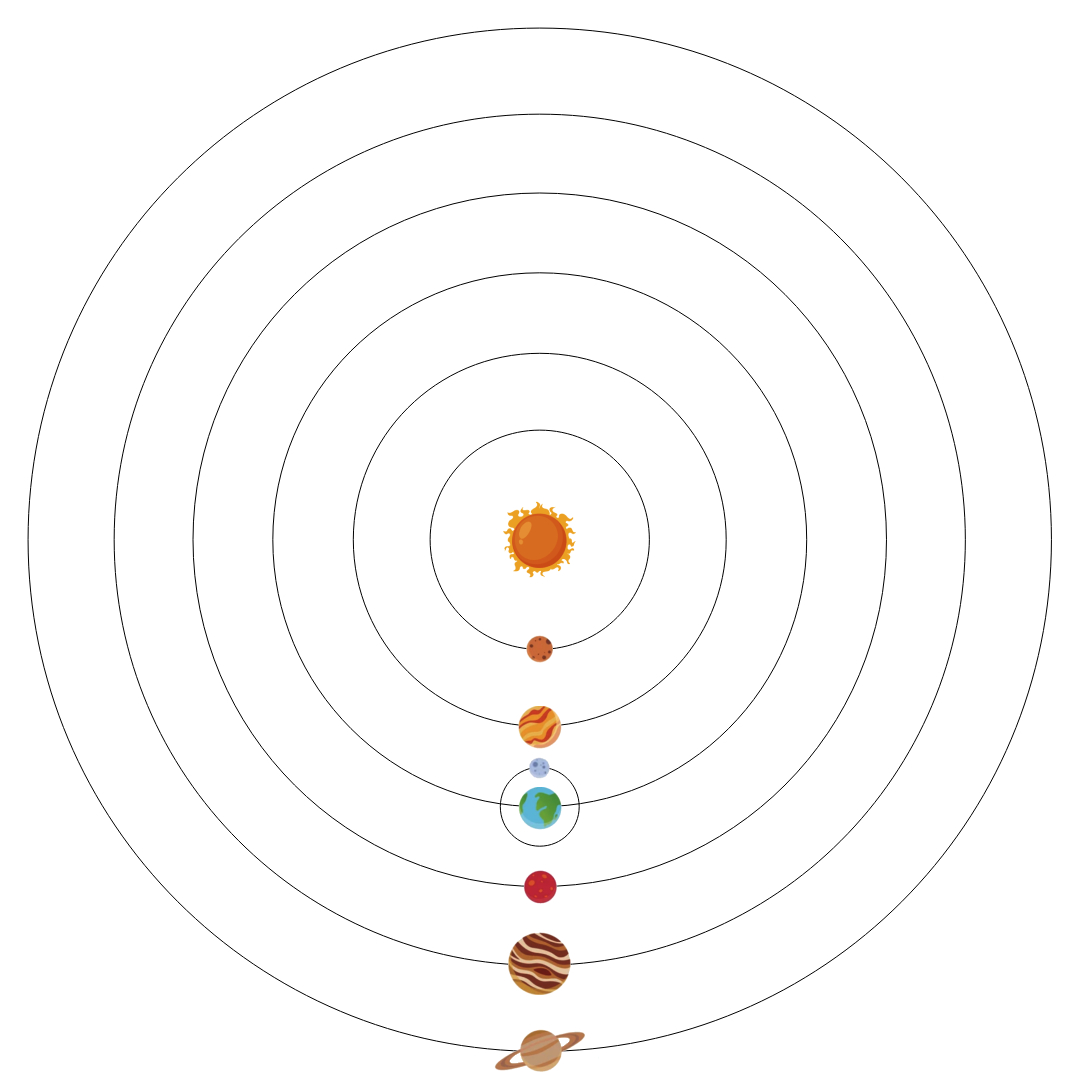
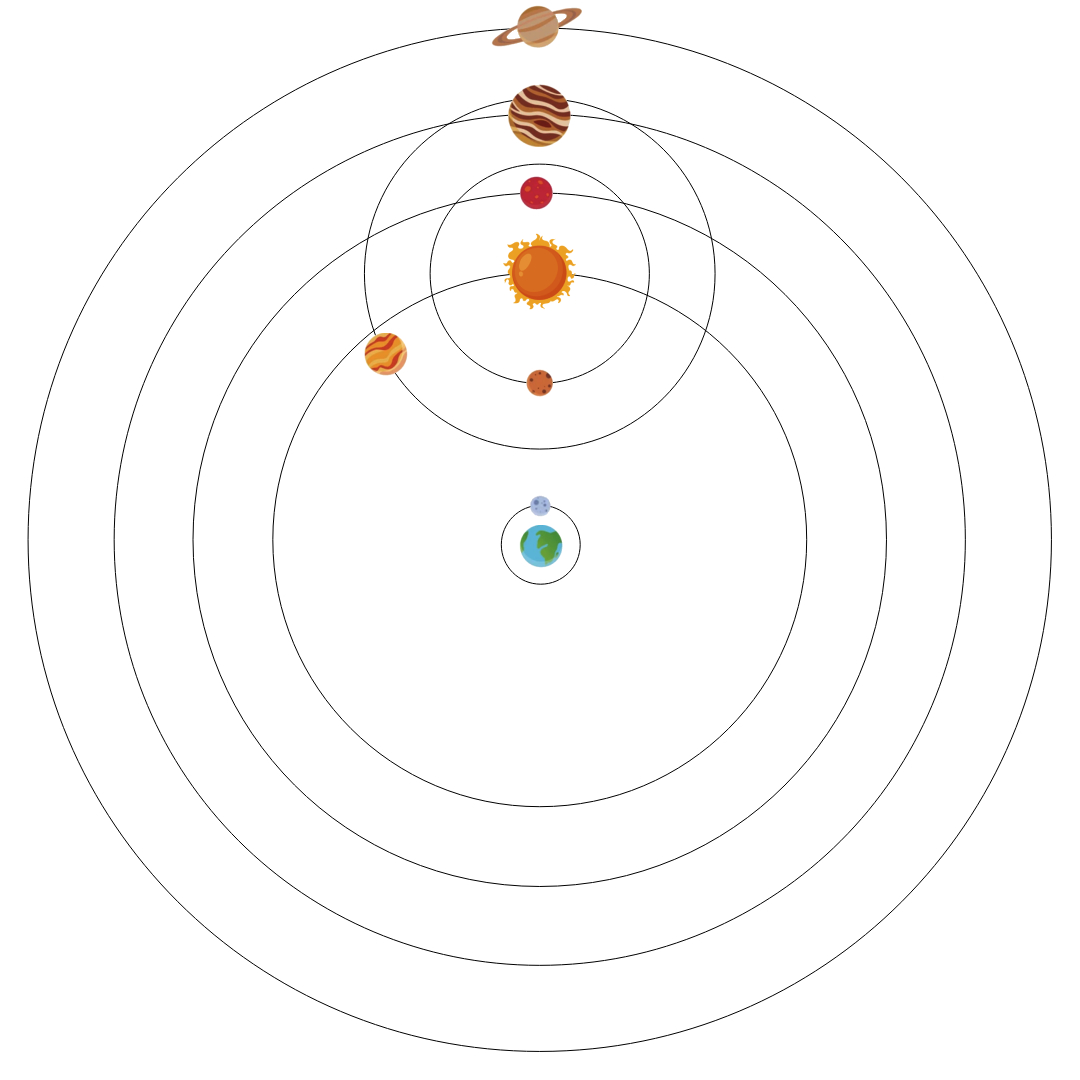
The Akkadians took meticulous measurements of the movements of the gods, or the planets, through the sky and noted that they did not all move at the same rate. Some moved more slowly than others. The moon, for example, returns to the same place against the sun (synodic movement) in roughly 29.5 days, whereas Mercury takes almost three times that long (≈88 days). Venus takes longer than Mercury (≈225 days); and the Sun, viewing it as orbiting the earth from a geocentric perspective, takes an even longer 365 days (a sidereal measurement, its movement compared against the stars, which were considered an immovable backdrop; a relatively true assumption given their extreme distances compared to the planets).
When all the then-observable planets, including the sun, are arranged according to observed or apparent orbital speeds, they fall precisely into the Chaldean Order.
Above and Higher
This order not only accounted for the apparent orbital speed of the planets, but was used to ascribe ascendency in dominion or governance to the gods associated with the worlds. Their “greatness” was expressed in both height (spatially above Earth) and authority (cosmic and moral order). The higher a sphere, the closer it was to the realm of the fixed stars and the divine source. In other words, the slower a planet, the greater it was until it was as slow as the distant fixed stars and thus equally as great. The soul’s ascent back to the divine (the soul having originated in the fixed stars) mirrored this cosmic order—rising away from earth through the planetary gods, each of whom purified or tested the returning soul in some aspect of being.
The order of the Chaldean council of gods were as follows:
| Planet | Deity | Sphere/Role |
|---|---|---|
| Saturn | Ninurta (or Ninib) | Judge and limiter; associated with boundaries and fate |
| Jupiter | Marduk | King of the gods; order, rulership, law |
| Mars | Nergal | War, destruction, pestilence |
| Sun | Shamash | Justice, truth, divine light |
| Venus | Ishtar (Inanna) | Love, fertility, conflict, duality |
| Mercury | Nabu | Wisdom, writing, prophecy |
| Moon | Sin (Nanna) | Cycles, time, fertility, intuition |
Later civilizations, such as the Israelites, continued the tradition of a council of gods watching over the affairs of the earth, usually grounded in a geocentric worldview (though Book of Mormon evidence would suggest that the reality of the dynamic forces underpinning the mechanics of planetary movement were nevertheless understood [see Hel. 12:15]). Some names of these planets have survived in the Hebrew Bible, including the sun as שֶׁמֶשׁ (Shemesh), essentially unchanged from the Akkadians (and notably similar to Abraham’s “Shinehah“), and Saturn, the greatest of the council, which was called שַׁבְּתַאי (Shabbtai), which planet was associated with rest or cessation of movement (perhaps because it came nigh to the fixed stars, taking ≈27 years to complete its orbit) and which governed the day of rest, the שַׁבָּת (Shabbat “Sabbath”). Citing back to the claim that the days of the week have been unbroken for thousands of years, it is pertinent to note that our modern Saturday (Saturn day) is still the day of rest to modern Jews.
Not surprisingly, this same doctrine of relative ascendancy based on apparent speeds shows up a millennia earlier, during the times of the Sumerians, via revelation through the Lord to Abraham. In fact, Abraham says he obtained his urim and thummim in Ur (the Sumerian capital) and may have even had his all-encompassing stellar revelation in Ur:
“And I, Abraham, had the Urim and Thummim, which the Lord my God had given unto me, in Ur of the Chaldees; and I saw the stars, that they were very great, and that one of them was nearest unto the throne of God; and there were many great ones which were near unto it; and the Lord said unto me: These are the governing ones; and the name of the great one is Kolob, because it is near unto me, for I am the Lord thy God: I have set this one to govern all those which belong to the same order as that upon which thou standest.
“And the Lord said unto me, by the Urim and Thummim, that Kolob was after the manner of the Lord, according to its times and seasons in the revolutions thereof; that one revolution was a day unto the Lord, after his manner of reckoning, it being one thousand years according to the time appointed unto that whereon thou standest. This is the reckoning of the Lord’s time, according to the reckoning of Kolob.
“And the Lord said unto me: The planet which is the lesser light, lesser than that which is to rule the day, even the night, is above or greater than that upon which thou standest in point of reckoning, for it moveth in order more slow; this is in order because it standeth above the earth upon which thou standest, therefore the reckoning of its time is not so many as to its number of days, and of months, and of years.
“And the Lord said unto me: Now, Abraham, these two facts exist, behold thine eyes see it; it is given unto thee to know the times of reckoning, and the set time, yea, the set time of the earth upon which thou standest, and the set time of the greater light which is set to rule the day, and the set time of the lesser light which is set to rule the night.
“Now the set time of the lesser light is a longer time as to its reckoning than the reckoning of the time of the earth upon which thou standest. And where these two facts exist, there shall be another fact above them, that is, there shall be another planet whose reckoning of time shall be longer still; and thus there shall be the reckoning of the time of one planet above another, until thou come nigh unto Kolob, which Kolob is after the reckoning of the Lord’s time; which Kolob is set nigh unto the throne of God, to govern all those planets which belong to the same order as that upon which thou standest.
“And it is given unto thee to know the set time of all the stars that are set to give light, until thou come near unto the throne of God” (Abr. 3:1 – 10).
As I wrote in the blog post, If You Could Hie to Sirius B, Abraham’s understanding through these verses were likely obtained via physical observations (‘behold thine eyes see it’) as opposed to ecstatic visions (those come in the following verses). For example, his reference to the ‘throne of God’ was likely a reference to the asterism known as the throne of Jawza, and stars being ‘near unto me’ are a reference to stars near the constellation Orion. The Lord reveals an otherwise unobservable fact about Kolob—that one axial revolution there equals 1,000 Earth years—but Abraham’s other observations concern the apparent movements of the planets, including ‘the planet which is the lesser light’ and the planet ‘which is to rule the day’ (note that God refers to the sun as being a planet).
The Lord repeatedly refers to an ‘order’ of planets in these verses and that Abraham will know the ‘set times’ of their light to the earth. As it says in Genesis, God specifically designed the light of other worlds to “be for signs”, that the earth might reckon for its own “seasons, and for days, and years” (Gen. 1:14). In more modern days the Lord affirmed the same through Joseph Smith too regarding the planets giving “light to each other in their times and in their seasons, in their minutes, in their hours, in their days, in their weeks, in their months, in their years” (D&C 88:44). This means that Abraham in referring to ‘revolutions’ could have meant axial revolutions for planets he could physically observe closely enough to measure (e.g., the moon) and for those more distant worlds, whose light passing through different ranges of the zodiac would indicate ‘their times’ and ‘their seasons,’ the term could have referred to apparent orbital motions. The context of the physical observability of the world being measured becomes the key to determine which.
Slower and Higher
This contextual key harmonizes Abraham’s observations of the moon with the Chaldean Order of hierarchical planetary movements. In the former case, the revolutions measured are axial rotations. This can be proven by noting that the Lord says to Abraham that ‘the planet which is the lesser light…moveth in order more slow’ than the earth. In all measurable facts, the moon only moves slower than the earth in one particular regard: its axial rotation. Since it is tidally locked to the earth, the period of its rotation is the same as the period of its orbit, which is ≈27 earth days, whereas the earth rotates in ≈24 hours. According to the Lord to Abraham, this relative slowness of movement establishes the moon as ‘above’ or ‘greater’ than the frame of the earth.
All other measurements derived by Abraham in his physical observations compare planets not in axial rotation but in apparent motion from the perspective of the earth. The moon, in this context, moves more quickly than Mercury, making Mercury ‘above’ or ‘greater’ than the moon. This same comparison then causes Venus to stand ‘above’ Mercury, and the sun (taking ≈365 days to complete its apparent “orbit” around the earth) stands above them all. Mars then stands above the sun, being slower in its movement across the sky, followed by Jupiter, followed by Saturn. Clearly, Abraham is the author of the Chaldean Order, and thus the father of the names of the days of the week.
This contextual understanding of movement allows us to build out a set of rules that harmonize both Abraham’s observations and the Chaldean Order:
Abrahamic-Chaldean Order Rules:
- Central Reference Frame: Position the observer’s world as the fixed center. All other bodies move relative to it, creating apparent paths that form the basis for observations and hierarchies.
- Nested Orbital Structure: Bodies are organized in layers: The primary light source orbits the Central Reference Frame elliptically. Independent wanderers orbit this light source elliptically. Dependent companions orbit either the center or an independent wanderer directly.
- Hierarchy of Status: Rank bodies by their effective slowness of motion—slower overall movement indicates higher status and longer cycles of time measurement. This creates an ascending chain where each level governs the one below.
- Motion Metrics for Comparison:
- For paired systems (a primary body and its companion): Use axial or self-rotation periods; longer (slower) rotation denotes higher status within the pair.
- Governance of paired systems is limited to the primary body.
- For independent wanderers: Use apparent angular speeds from the center or orbital periods around their parent; slower speeds denote higher status in the broader chain.
- For paired systems (a primary body and its companion): Use axial or self-rotation periods; longer (slower) rotation denotes higher status within the pair.
- Distinction Between Companions and Wanderers:
- Companions: Directly orbit a primary (center or wanderer), exhibit faster local motions, and serve subordinate roles (e.g., cyclic influences on their primary).
- Wanderers: Orbit the primary light source, show variable but generally slower apparent motions, and hold broader governing positions in the hierarchy.
- Universal Application: Apply these rules recursively to any observed system, extending the chain outward to encompass larger structures, ensuring consistency in predictions and symbolic order without assuming motion of the center.
The sophistication of these observations on Abraham’s part cannot be understated. In fact, they cannot even be understood appropriately without admitting that Abraham was also conversant with the gravitational dynamics that cause the sun to be the governing force creating the principle orbit for all the planets, including the earth. It was only later during the uninspired intervening ages of man that geocentrism and flat-earth belief were touted as absolute truths. The Lord was teaching Abraham advanced principles of recursive, relational astrophysics.
This sophistication can be best realized by applying the Abrahamic-Chaldean Order Rules above and applying them to two different planetary frames.
Earth as Frame
Applying the rules to Earth as a frame, we note the following:
- The moon is “above” or higher than the earth, governing the earth.
- The moon, earth’s only moon, axially rotates slower than the earth, causing it to measure fewer days than the earth relative to the light of the sun.
- The speed of its orbit is not compared to the speed of earth’s orbit because rule 1 places the frame planet spinning in a fixed position in space.
- Mercury is “above” or higher than the moon, governing the moon and the earth.
- Mercury, moves through the sky, in orbit around the sun, more slowly than the moon moves through the sky around the earth when viewed from the earth.
- Axial rotation is not measured for independent worlds, only moons relative to their host planet.
- Mercury has inherent governance over the moon given its status as a non-paired system to the reference frame world (earth).
- Venus is “above” or higher than Mercury, governing the worlds below it in order.
- Venus, measured like Mercury, moves even more slowly through the sky than either Mercury or the moon.
- The sun is “above” or higher than Venus, governing the worlds below it in order.
- The sun, following the order, and viewed from a fixed world frame, orbits around the earth even more slowly than Venus orbits around the sun.
- Mars is “above” or higher than the sun, governing the worlds below it in order.
- Mars appears to orbit both the sun and the fixed earth, being an “outer world” compared to the gravitational orbit of the earth around the sun (confusing the likes of Plato through Tycho); but the only measure that matters here is the apparent speed of its orbit, which is longer than the sun.
- Jupiter is “above” or higher than Mars, governing the worlds below it in order.
- Jupiter moves more slowly than all the other planets measured so far.
- Saturn is “above” or higher than Jupiter, governing the worlds below it in order.
- Saturn moves the slowest in the order of the classic planets (Uranus and Neptune move even slower);
- It comes nearest the non-movement of the fixed planets or stars of the night sky.
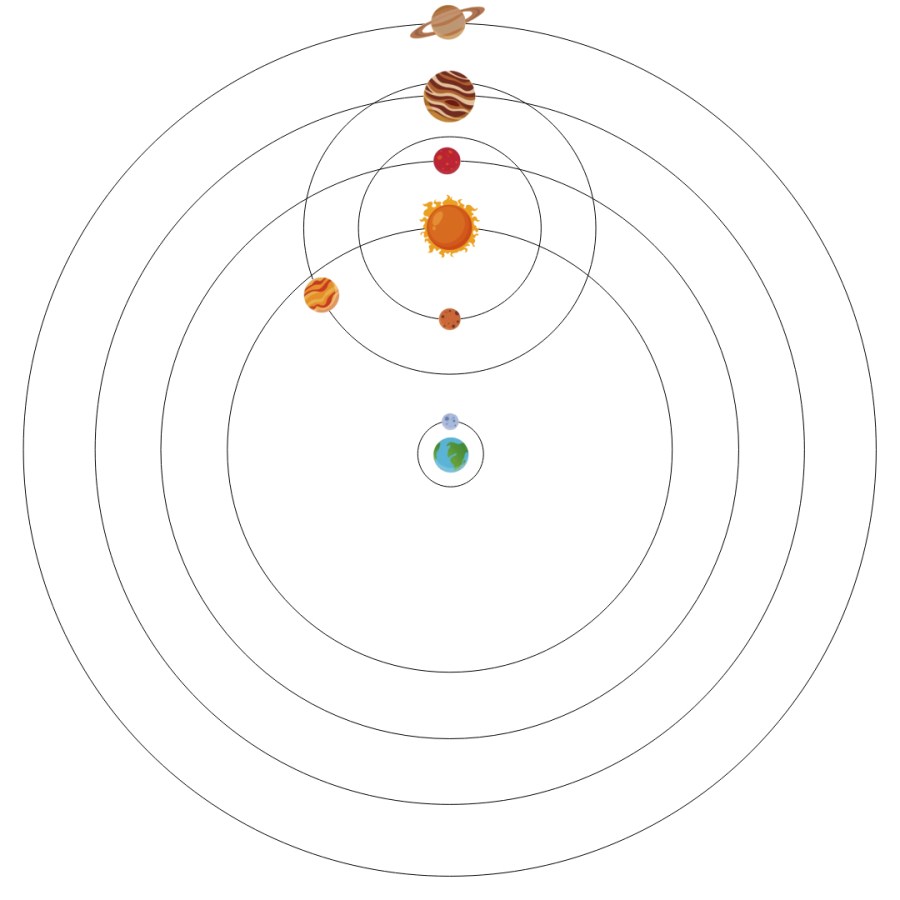
This result perfectly aligns to the instructions provided by the Lord to Abraham and the resultant Chaldean Order noted by succeeding civilizations, inheritors of Abraham’s measurements. But the sophistication is not fully seen until one applies the rules to another planetary frame. What if instead of earth being the planet ‘upon which thou standest, in point of reckoning,’ we instead translate our observational frame coordinates to Mars?
Mars as Frame
Applying the rules to Mars as a frame, we note the following:
- Mars has two moons, Deimos and Phobos, which are both tidally locked (it has a side that constantly faces its host planet)
- Deimos is “above” or higher than Mars, governing Mars.
- Deimos takes ≈30 hours to orbit Mars, giving it a synodic axial revolution longer than that of Mars (≈25 hours).
- Phobos is “below” or lesser than Mars, being governed by Mars.
- Phobos takes ≈7.5 hours to orbit Mars, giving it a synodic axial revolution shorter than that of Mars.
- Deimos is “above” or higher than Mars, governing Mars.
- Mercury is “above” or higher than either of Mars’ moons, governing Mars and its moons.
- Mercury, moves through the sky, in orbit around the sun, more slowly than Phobos and Deimos move through the sky around Mars when viewed from Mars.
- Axial rotation is not measured for independent worlds, only moons relative to their host planet.
- Mercury has inherent governance over Mars’ moons given its status as a non-paired system to the reference frame world (Mars).
- Venus is “above” or higher than Mercury, governing the worlds below it in order.
- Venus, measured like Mercury, moves even more slowly through the sky than either Mercury or the moon.
- Earth is “above” or higher than Venus, governing the worlds below it in order.
- Earth, measured like Venus, moves even more slowly through the sky than either Venus or the Mercury.
- The sun is “above” or higher than the earth, governing the worlds below it in order.
- The sun, following the order, and viewed from a fixed world frame, orbits around Mars even more slowly than earth orbits around the sun.
- (Mars’ gravitational orbit around the sun takes 687 earth days, making the suns’ apparent orbit around Mars 687 earth days, 1.8 times earth’s 365 day orbit.)
- Jupiter is “above” or higher than the sun, governing the worlds below it in order.
- Jupiter appears to orbit both the sun and the fixed frame of Mars, being an “outer world” compared to the gravitational orbit of Mars around the sun; but the only measure that matters here is the apparent speed of its orbit, which is longer than the sun.
- Saturn is “above” or higher than Jupiter, governing the worlds below it in order.
- Jupiter moves more slowly than all the other planets measured so far.
- It comes nearest the non-movement of the fixed planets or stars of the night sky.
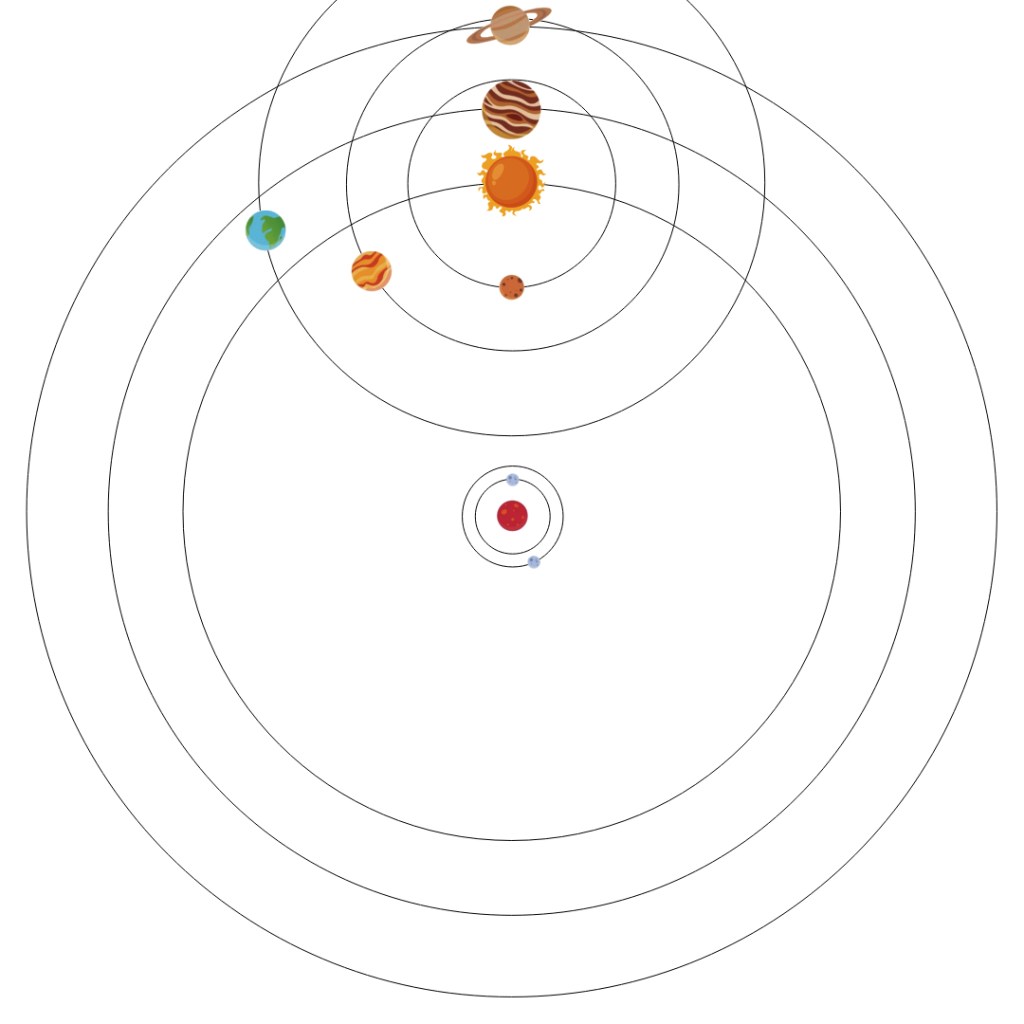
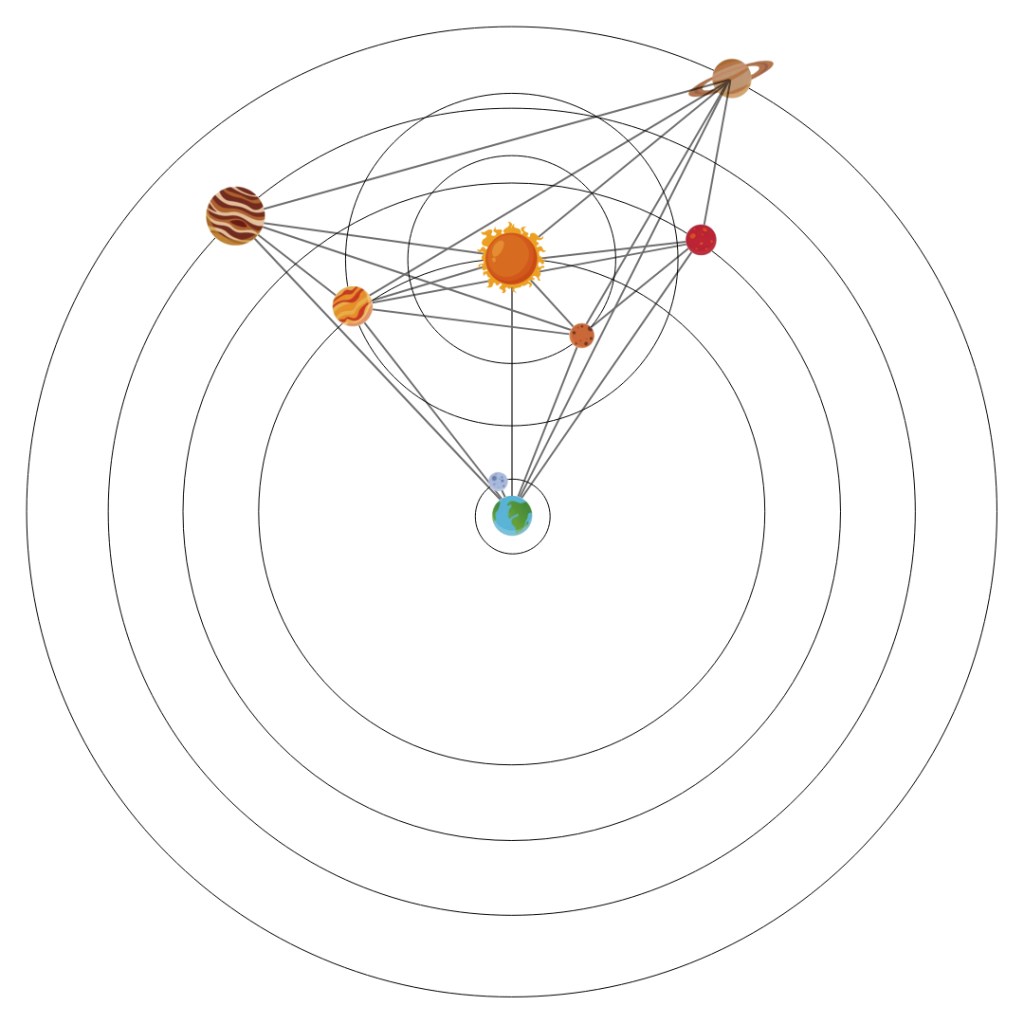
Look closely at the two results, one as measured from earth and one as measured from Mars, and what do we find? From Earth as a fixed frame (geocentrism), Mars “governs” Earth; from Mars as the frame (areocentrism), Earth “governs” Mars! The truth is they mutually govern each other. Indeed, by applying the rules, we can see that the Lord was teaching Abraham about general relativity; it is now scientifically understood today that the governing force of orbital dynamics, gravity, is not a one-way governing force but a mutual one shared between all bodies within a given system. It is no truer to say that the gravity of earth governs the motions of Mars than it is to say that the gravity of Mars governs the motions of earth within relativistic astrophysics.
The implication of recursion and scalability is that one never reaches a single “greatest world,” since higher worlds may exist relative to the current highest known. Though Kolob is described as greatest, the principles given to Abraham imply that “greatest” is relative. To the credit of the genius of Joseph Smith, it goes without saying that he was well ahead of his time in understanding the nature of the universe simply by reading up on Abraham’s writings. (It is no wonder that at the same time as he translated these texts he also declared the doctrine of an infinite regression of gods at the King Follet discourse.)

Taken to the extreme within the classic worlds: from Saturn’s perspective (Saturnocentrism), the slowest—and thus greatest—would be the Sun, as other worlds appear to move faster against the sky; conversely, from Mercury’s perspective (Mercurocentrism), the Sun moves quickest and would be least in that governing chain. It is all relational: the greatest is the least and the least is the greatest; nay, none are ever lesser than the observational frame itself. Applying relativistic astrophysics to the principle of governance shows that each world in its own sphere shares governance in a distributed cooperative system—definitionally a heterarchy.
Another, and possibly greater, implication relates to how God views spirits.
More Intelligent and Eternal
The third chapter of the Book of Abraham begins with the Lord’s exposition on the relative ordering of worlds, as described above, which we have just learned is not inherently hierarchal but relational and mutual, with underlying ontological dynamics. Continuing in the chapter, though, involves the Lord teaching Abraham about spirits using this same framework, invoking parallel language in a chiasmus format. Do the rules for worlds also apply to spirits? And does the Lord say anything qualitative implying more than strict hierarchy? The answer is yes:
“If two things exist, and there be one above the other, there shall be greater things above them; therefore Kolob is the greatest of all the Kokaubeam that thou hast seen, because it is nearest unto me.
“Now, if there be two things, one above the other, and the moon be above the earth, then it may be that a planet or a star may exist above it; and there is nothing that the Lord thy God shall take in his heart to do but what he will do it. Howbeit that he made the greater star; as, also, if there be two spirits, and one shall be more intelligent than the other, yet these two spirits, notwithstanding one is more intelligent than the other, have no beginning; they existed before, they shall have no end, they shall exist after, for they are gnolaum, or eternal.
“And the Lord said unto me [Abraham]: These two facts do exist, that there are two spirits, one being more intelligent than the other; there shall be another more intelligent than they; I am the Lord thy God, I am more intelligent than they all” (Abr. 3:16 – 19).
There it is: though the spirits are relational in terms of intelligence when taken from a certain reference point, they are also all eternal—without beginning or end. This parallels worlds as a heterarchy: from their own frames, they mutually bear rule, while dynamically their motions reflect distributed mass and gravity around the Sun.
For worlds: though they orbit the Sun due to its mass, from their perspectives they each bear rule with one another—each is, in its own right, the center of the universe. For spirits: though all are co‑eternal peers, from their perspectives they bear rule with one another—each is, in its own right, the center of the universe. In a word, and definitionally, spirits and worlds are not solely or strictly hierarchies but instead fundamentally related as heterarchies.
Like the planets, the spirit that is ‘greatest is the least and the least is the greatest’; nay, ‘none are ever lesser’ than the observer himself (the humble can learn from anyone).
The Kingdom as a Heterarchy
Jesus seemed to teach this very principle of heavenly government, even specifically contrasting it with human hierarchical tendencies of governing, when he taught:
“The kings of the Gentiles exercise lordship over them; and they that exercise authority upon them are called benefactors. But ye shall not be so: but he that is greatest among you, let him be as the younger; and he that is chief, as he that doth serve. For whether is greater, he that sitteth at meat, or he that serveth? is not he that sitteth at meat? but I am among you as he that serveth.
“Ye are they which have continued with me in my temptations. And I appoint unto you a kingdom, as my Father hath appointed unto me; that ye may eat and drink at my table in my kingdom, and sit on thrones judging the twelve tribes of Israel” (Luke 22:25 – 30).
The narrowness of human thought tends to want to see everything within clean hierarchies, the tendency of most people being to follow the crowd and do what they are told by perceived authority figures. The results of the above analysis reveal that God’s perspective of government and rulership are “far more liberal” than people are apt to assume (for the righteous proven worthy to reign with Him). He admitted to Abraham that all spirits were of an equally enduring quality as Himself, the worth of souls truly being great in his sight because He is one of them (see D&C 18:10; cf. 93:29). As Joseph Smith taught:
“God himself, finding he was in the midst of spirits and glory, because he was more intelligent, saw proper to institute laws whereby the rest could have a privilege to advance like himself. The relationship we have with God places us in a situation to advance in knowledge. He has power to institute laws to instruct the weaker intelligences, that they may be exalted with himself, so that they might have one glory upon another, and all that knowledge, power, glory, and intelligence, which is requisite in order to save them in the world of spirits” (TPJS, 354).
Rather than dictate to less intelligent spirits, as we might assume a monarch or autocrat with the title of “God” might do, we find instead a generous being who explains laws and invites other spirits to “counsel with” him in all their ways (Alma 37:37; cf. D&C 58:25 – 28). We find a God who calls himself “friend” to the faithful (see James 2:23), the “King of those who reign as kings and Lord of those who rule as lords” (1 Tim. 6:15, AB), a being who recognizes Himself in each spirit and organizes them as his “children” (Rom. 8:16) and then invites them to “reason together” with Him (Isa. 1:18).
This ruler does not seek self‑aggrandizement; He is “greater” precisely because He aggrandizes others. He rules not alone but distributes authority among rulers, forming a perfect heterarchy. This is the being who placed his hand on Abraham’s eyes to show him all the worlds He had made while saying, “My son, my son…, behold I will show you all these” (Abr. 3:12).
For more on how this knowledge affects our understanding of the structure of the priesthood—and hence the Kingdom of God—stay tuned for the next blog post: “No Man ‘Holds’ the Priesthood.”
 Home | The Science of Theology